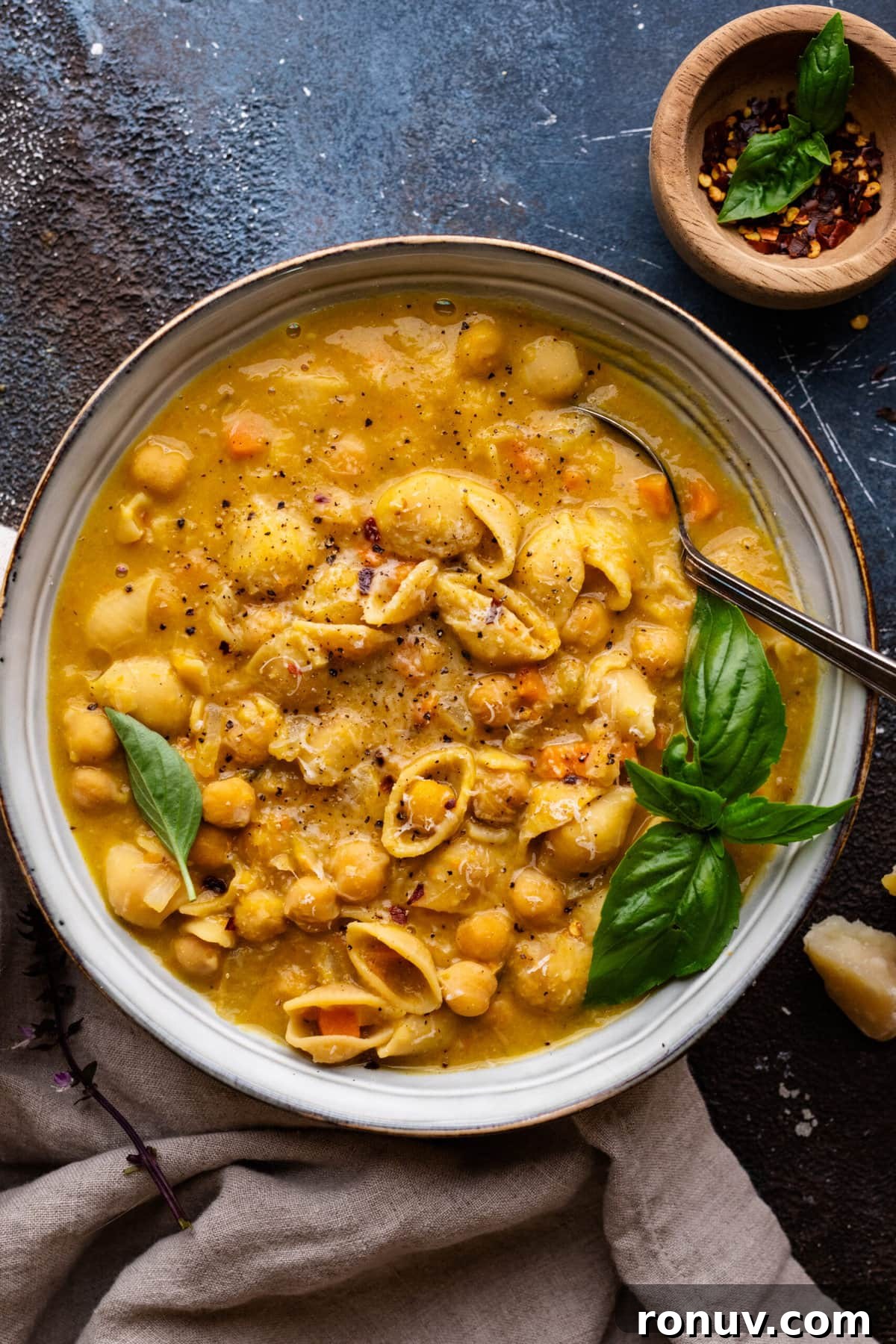
Pasta e Ceci is a comforting, rustic Italian stew of pasta and chickpeas. With just a few humble ingredients, the soup gains depth from fresh herbs and a simmered Parmesan rind. The result is rich, hearty, and perfect for cool weather.
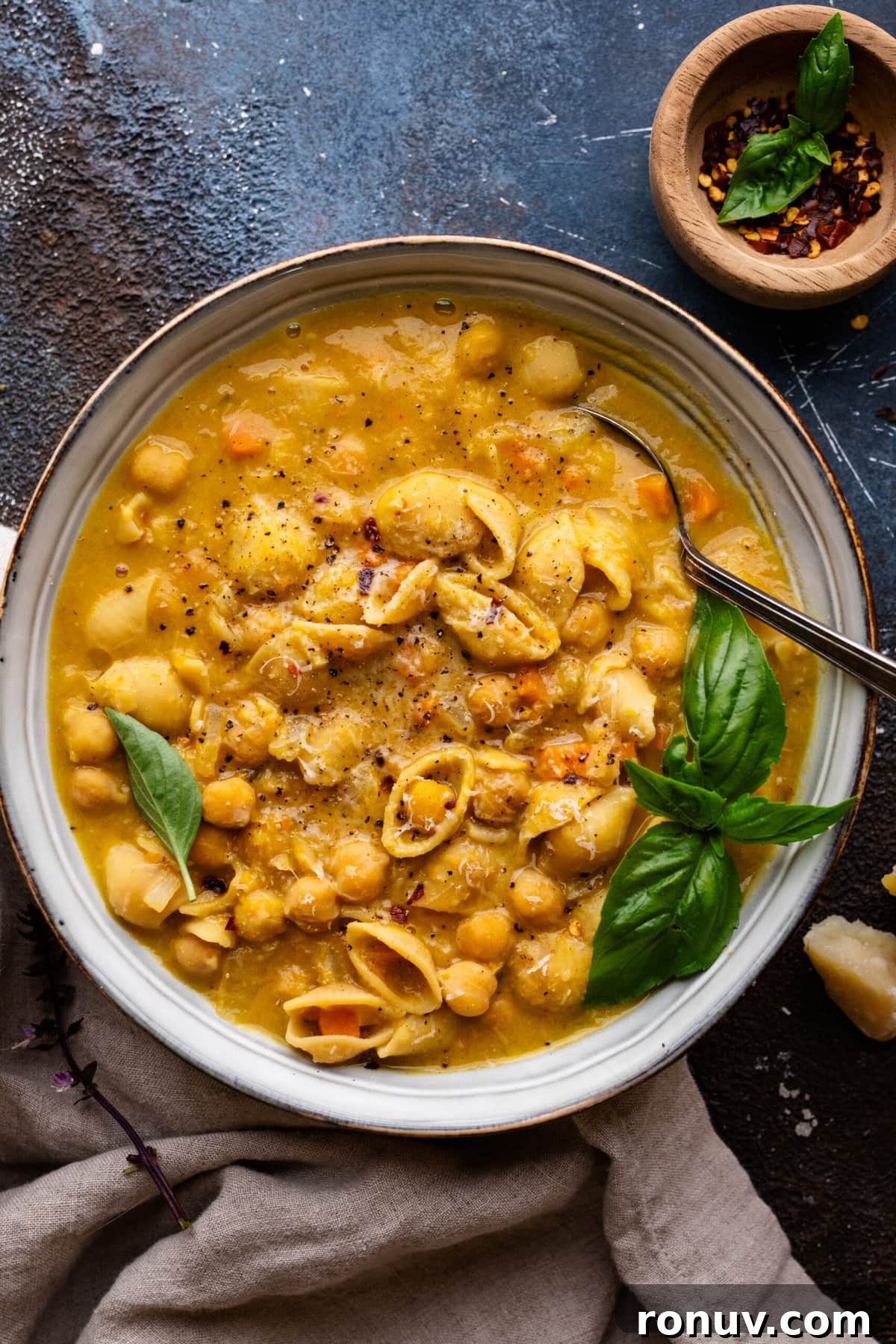
If you love pasta and chickpeas, this Italian Pasta e Ceci (pronounced “pasta eh che-chi”) will quickly become a favorite. The name literally means “pasta and chickpeas.” It’s similar in character to Pasta e Fagioli but focuses on the simple, comforting pairing of pasta and chickpeas. Each spoonful is full of flavor despite the short ingredient list, and the soup is especially cozy during fall and winter.
Why This Recipe Works
This version respects the traditional simplicity while boosting flavor and texture in a few easy ways. Instead of plain water, the base combines vegetable broth and water for extra savory depth. To achieve a naturally creamy texture without heavy cream, part of the soup is pureed and returned to the pot, which thickens and enriches the broth.
Fresh herbs—rosemary and sage—are added on the stem so they infuse the soup as it simmers and are removed before serving. A Parmigiano Reggiano rind simmers in the pot, lending intense, savory umami; this step is a key flavor builder, so don’t skip it. For a nutritious twist, this recipe works beautifully with chickpea-based pasta or any small pasta shape such as small shells or ditalini.
Ingredients – What You Need
Below is a concise overview of the main ingredients used in this recipe.
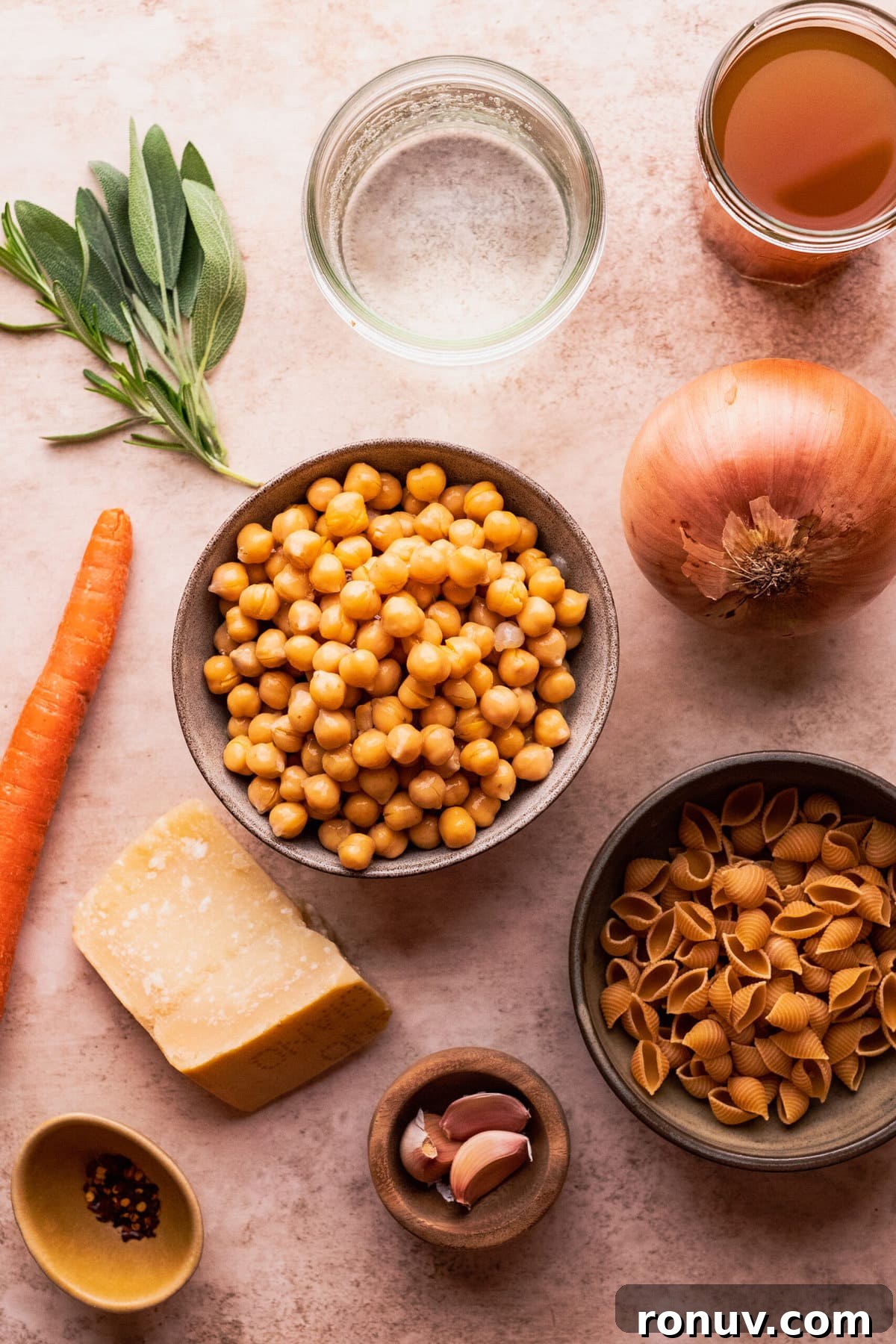
Pasta: small shapes such as shells or ditalini. Chickpea-based pasta is a nutritious, gluten-free option.
Chickpeas: cooked chickpeas are the centerpiece.
Onion & carrot: diced onion (yellow preferred) and a carrot add sweetness and body.
Garlic: fresh minced garlic with a touch of garlic powder for depth.
Broth & water: use low-sodium vegetable broth and water (equal parts) for a flavorful but balanced base.
Red pepper flakes: a pinch for warmth, not heat.
Fresh sage & rosemary: add whole sprigs to steep and then remove.
Parmigiano Reggiano: use freshly grated cheese for serving and a rind to simmer in the soup for richness.
Step-by-Step Instructions
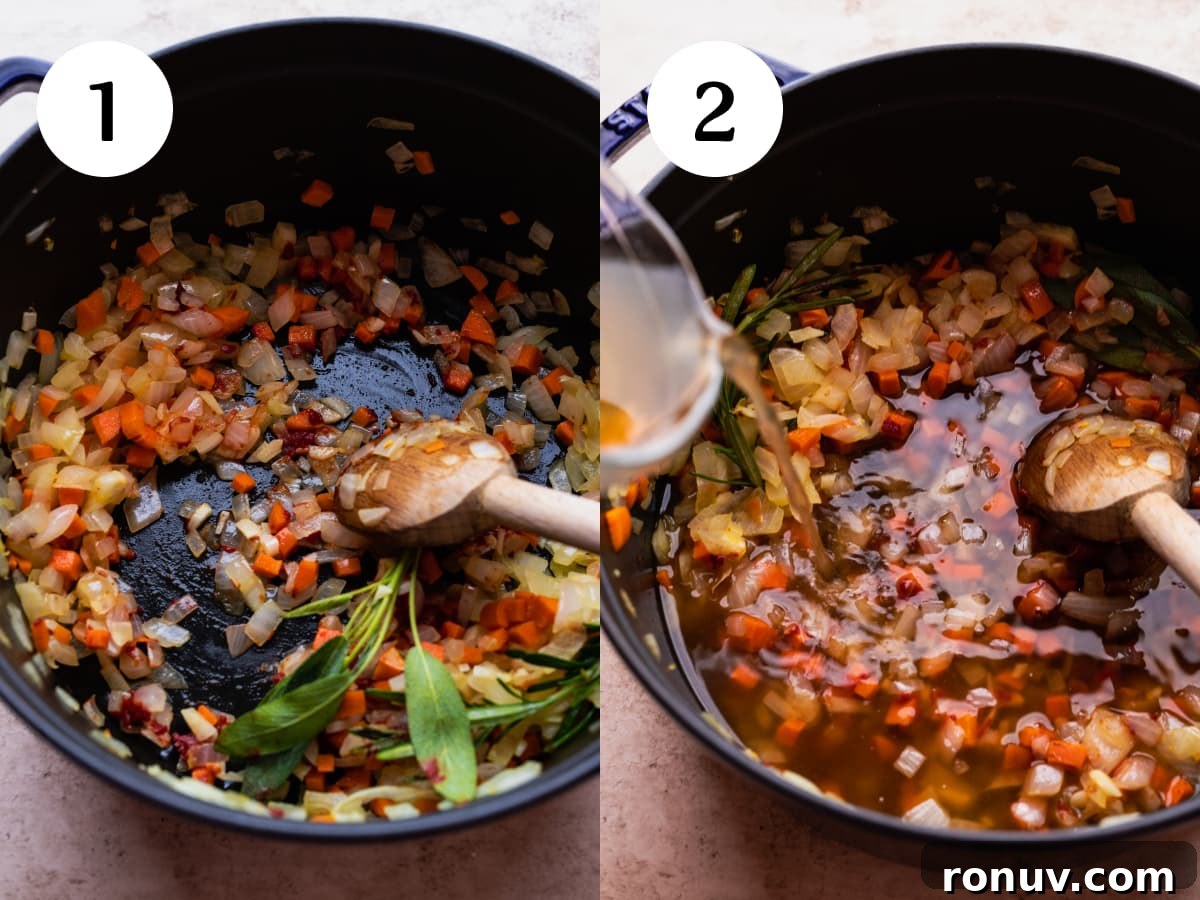
Step 1 – In a large pot, sauté the diced onion and carrot in olive oil over medium-low heat until softened, about 3 minutes. Add minced garlic and cook 30 seconds, then add the rosemary, sage sprig(s), and red pepper flakes and stir briefly to release their aroma.
Step 2 – Pour in the vegetable broth and water. Add the cooked chickpeas, a pinch of garlic powder, salt, and black pepper. Add the Parmesan rind to the pot.
Steps 3 & 4 – Partially cover and let the soup simmer gently for 20–25 minutes so flavors meld. Stir occasionally to prevent sticking and to help the Parmesan rind soften and infuse the broth.
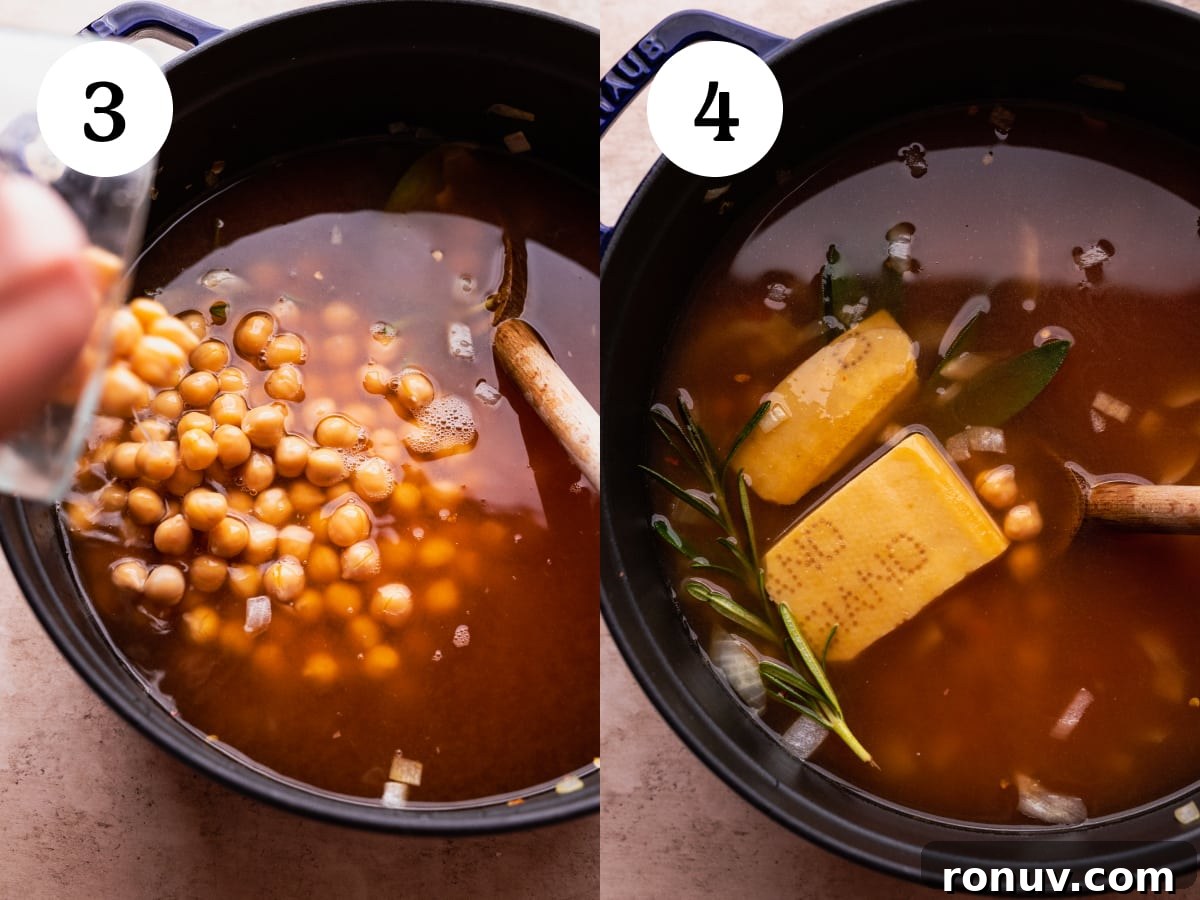
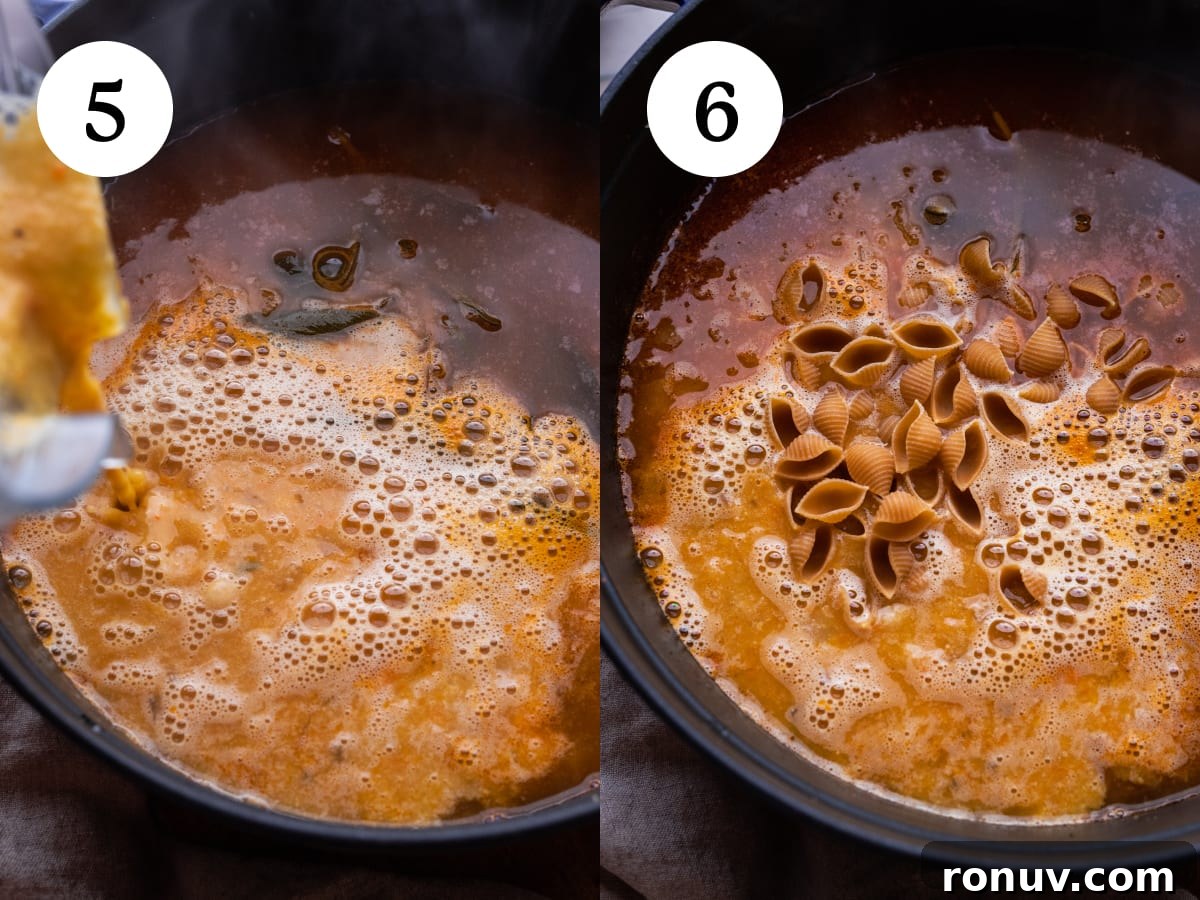
Step 5 – Carefully ladle about 2 cups of the soup into a high-powered blender (avoid herb sprigs and the rind) and blend until smooth. Return the puree to the pot and stir to combine; this will thicken the soup naturally.
Step 6 – Add the dried pasta to the soup and simmer until al dente. Because the pasta cooks in a simmering broth rather than rolling water, it may need a few extra minutes compared to package directions. Stir frequently to prevent the pasta from sticking to the bottom. When pasta is cooked, remove and discard the herb sprigs and Parmesan rind. Adjust seasoning and serve with freshly grated Parmigiano Reggiano.
Tips for Success
Choose the right pasta: Small shapes like small shells, ditalini, or broken pasta pieces work best. Chickpea pasta keeps the dish protein-rich and gluten-free-friendly.
Don’t skip the Parmesan rind: Simmering the rind adds deep, savory flavor. It won’t fully dissolve like a cheese sauce; it softens and enriches the broth.
Use fresh herbs: Whole sprigs of fresh rosemary and sage impart brightness and aroma that dried herbs can’t match.
Breadth of liquids: The recipe uses a mix of broth and water for balance. If using only water, increase seasoning to ensure the soup stays flavorful.
Blending options: If you prefer, use an immersion blender to puree part of the soup directly in the pot for a quicker method. A countertop blender gives more control over the amount pureed.
Adjust thickness: If the soup reduces too much or becomes too thick, stir in a splash of broth or water until the desired consistency is reached.
How to Freeze & Store Leftovers
Refrigerate: Store leftovers in an airtight container in the refrigerator for 3–4 days.
Freeze: Transfer cooled soup to freezer-safe containers or bags, remove excess air, and freeze for up to one month. Thaw before reheating on the stovetop and add a little broth or water if needed to restore texture.
Our Serving Suggestions
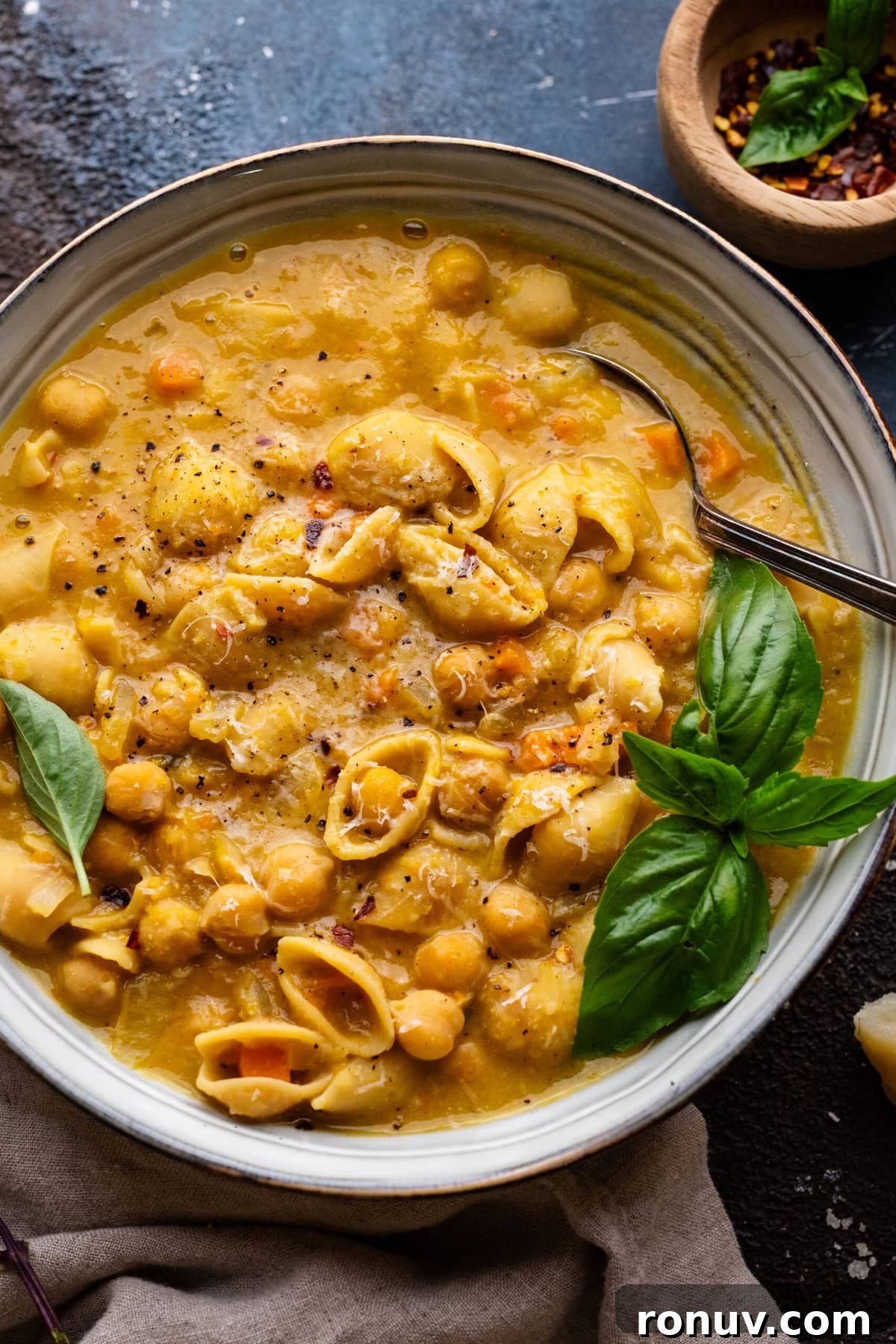
Pasta e Ceci pairs beautifully with a crusty loaf or homemade bread. It’s also lovely with a simple green salad or a rustic Italian-style salad dressed with olive oil and vinegar. Finish each bowl with a generous grating of Parmigiano Reggiano and a drizzle of extra-virgin olive oil if desired.
Pasta e Ceci (Italian Pasta and Chickpeas)
Summary: A rustic Italian stew of pasta and chickpeas simmered with fresh herbs and a Parmesan rind for deep, comforting flavor.
Prep Time: 10 mins | Cook Time: 35 mins | Total Time: 45 mins | Serves: 6
Ingredients
- 1 Tablespoon olive oil
- 1 medium to large yellow onion, diced
- 1 large carrot, diced
- 4 garlic cloves, minced
- 3 cups cooked canned chickpeas
- 1 cup dried pasta shells (or small pasta of choice)
- 3 cups low sodium vegetable broth
- 3 cups water
- 1/4 teaspoon red pepper flakes
- 1/4 teaspoon garlic powder
- 1 small bundle or sprig fresh sage
- 1–2 fresh rosemary sprigs
- 1/2 teaspoon salt (adjust to taste)
- 1/4 teaspoon black pepper
- 1 Parmigiano Reggiano rind
- Freshly grated Parmigiano Reggiano, for serving
Instructions
- Saute aromatics: In a large pot, heat the olive oil and sauté the diced onion and carrot with a pinch of salt over medium-low heat until softened, about 3 minutes. Add minced garlic and cook for 30 seconds, then add rosemary, sage, and red pepper flakes and stir briefly.
- Add liquids and chickpeas: Pour in the vegetable broth and water, add the cooked chickpeas, garlic powder, salt, and pepper. Stir, then add the Parmesan rind to the pot.
- Simmer: Partially cover and simmer gently for 20–25 minutes, stirring occasionally and scraping the bottom to prevent sticking.
- Blend part of the soup: Carefully transfer about 2 cups of the soup (avoiding herb sprigs and rind) to a blender and puree until smooth. Return the puree to the pot and stir to thicken the soup naturally.
- Cook the pasta: Add the dry pasta and simmer until al dente. Stir frequently to prevent sticking; pasta may take a few minutes longer than package times since it cooks in simmering broth.
- Finish and serve: Remove and discard the rind and herb sprigs. Taste and adjust seasoning. Serve hot with freshly grated Parmigiano Reggiano.
Notes
Types of pasta: Use small shapes like shells or ditalini. Chickpea-based pasta works well for added protein and is gluten-free-friendly.
Parmesan rind: Simmering the rind gives deep savory flavor—don’t skip it. It will soften but won’t completely melt.
Nutrition (per serving)
Serving: 1 cup | Calories: 205 kcal | Carbohydrates: 32.9 g | Protein: 8.4 g | Fat: 5 g | Fiber: 6.6 g
Author: Bethany Kramer