Whether you’re roasting a turkey for Thanksgiving, cooking a bird for Christmas, or serving a roast beef for Sunday dinner, nothing beats homemade gravy made from the giblets, pan drippings or au jus. The challenge for many home cooks is separating the fat from the flavorful broth when a dedicated fat separator isn’t available—or can’t be found in a crowded cupboard.
I don’t own a fat separator, and over the years I’ve developed a simple, reliable workaround that produces clear broth and separates the fat cleanly. It uses items most kitchens already have: a Ziploc bag, a pair of scissors and two measuring cups or bowls. This method follows the same basic principle as a commercial fat separator and takes only a few minutes.
- Strain the drippings and broth from the roasting pan or pot into a large heatproof measuring cup or bowl to remove any solids.
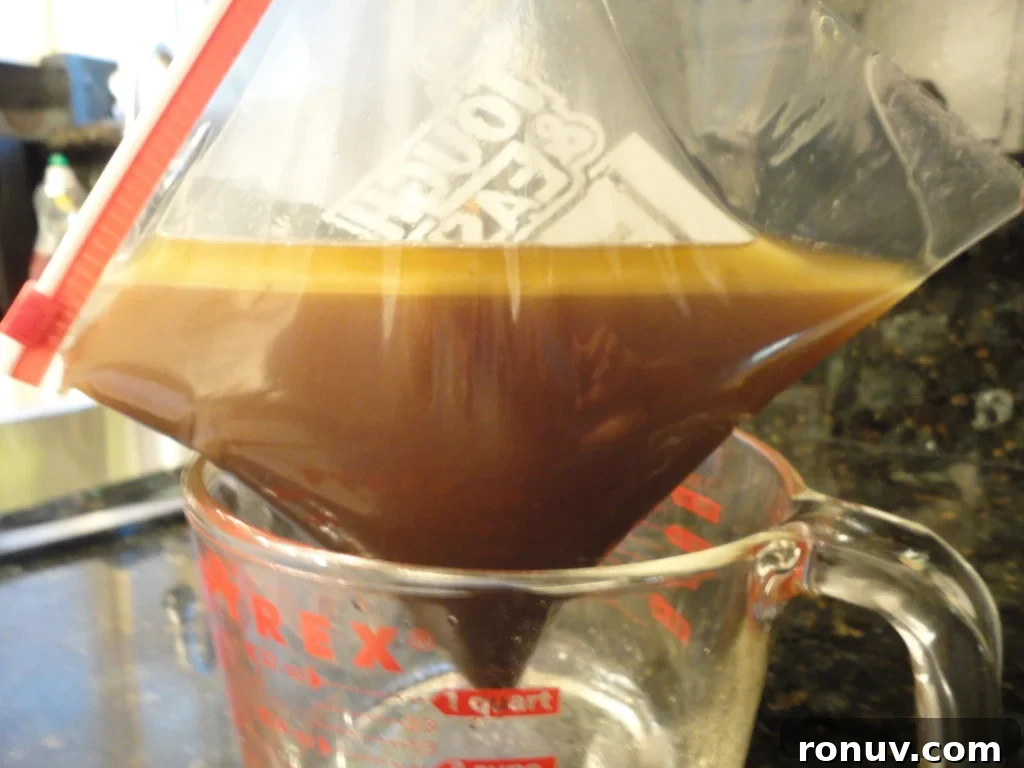
- Pour the warm (not boiling) liquid into a Ziploc bag and set it upright. Allow the mixture to sit undisturbed for a few minutes so the fat can rise to the surface and form a distinct layer.
Fat for the Roux on top of the Broth to make Homemade Gravy
- Once the fat has separated, seal the bag and hold it over the original large measuring cup so one corner points downward. With scissors, make a small snip in that corner. The broth will flow out first through the cut, leaving the fat behind.
- When most of the broth has drained out, pinch the cut closed, move the bag over a second measuring cup or bowl, then release the pinch so the remaining fat can pour into the second container.
- You’ll be left with a mostly fat-free broth in the first cup and concentrated drippings in the second—perfect for making a smooth, flavorful gravy with no fancy tools required.
Fat separated from the Broth to make Homemade Gravy using a Ziploc Bag
Now you’re ready to make gravy. My rule of thumb is one tablespoon of flour for every cup of broth or au jus. Heat the separated fat in a large saucepan, then whisk in the flour to form a roux. Cook the roux briefly until it bubbles and just begins to brown slightly—this removes the raw flour taste and develops a subtle nutty aroma that improves the gravy’s flavor and color.
Making Roux from Drippings
Once the roux is ready, slowly whisk the clear broth into the pan a little at a time. Continue stirring until the mixture reaches a gentle boil, then reduce the heat and simmer for a few minutes. This technique prevents lumps and gives you a smooth, silky gravy. Taste and season with salt and pepper as needed. If you want deeper color or a richer flavor, a splash of pan juices or a small amount of reduced au jus can be stirred in at the end.
Homemade Gravy
Quick tips and troubleshooting:
- If the broth is extremely hot when you transfer it into the bag, allow it to cool slightly to avoid warping the plastic; warm liquid separates faster than cold, but it doesn’t need to be boiling.
- For a thinner gravy, use a little less flour or more broth; for a thicker gravy, increase the flour slightly and cook a bit longer.
- If lumps form, strain the gravy through a fine mesh sieve or whisk vigorously over low heat until smooth.
- Reserve a tablespoon of unsalted butter to finish the gravy for extra shine and flavor, or add a splash of cream for richness.
- Leftover separated fat can be refrigerated for a few days and used to flavor other dishes or to make a future roux. Discard if it develops an off smell.
This Ziploc bag method is an inexpensive, fast way to separate fat from broth when you don’t have a dedicated fat separator. It keeps your gravy smooth and flavorful, saves cleanup time, and works with drippings from poultry, beef or pork. With a little practice you’ll be able to prepare perfect homemade gravy every time.