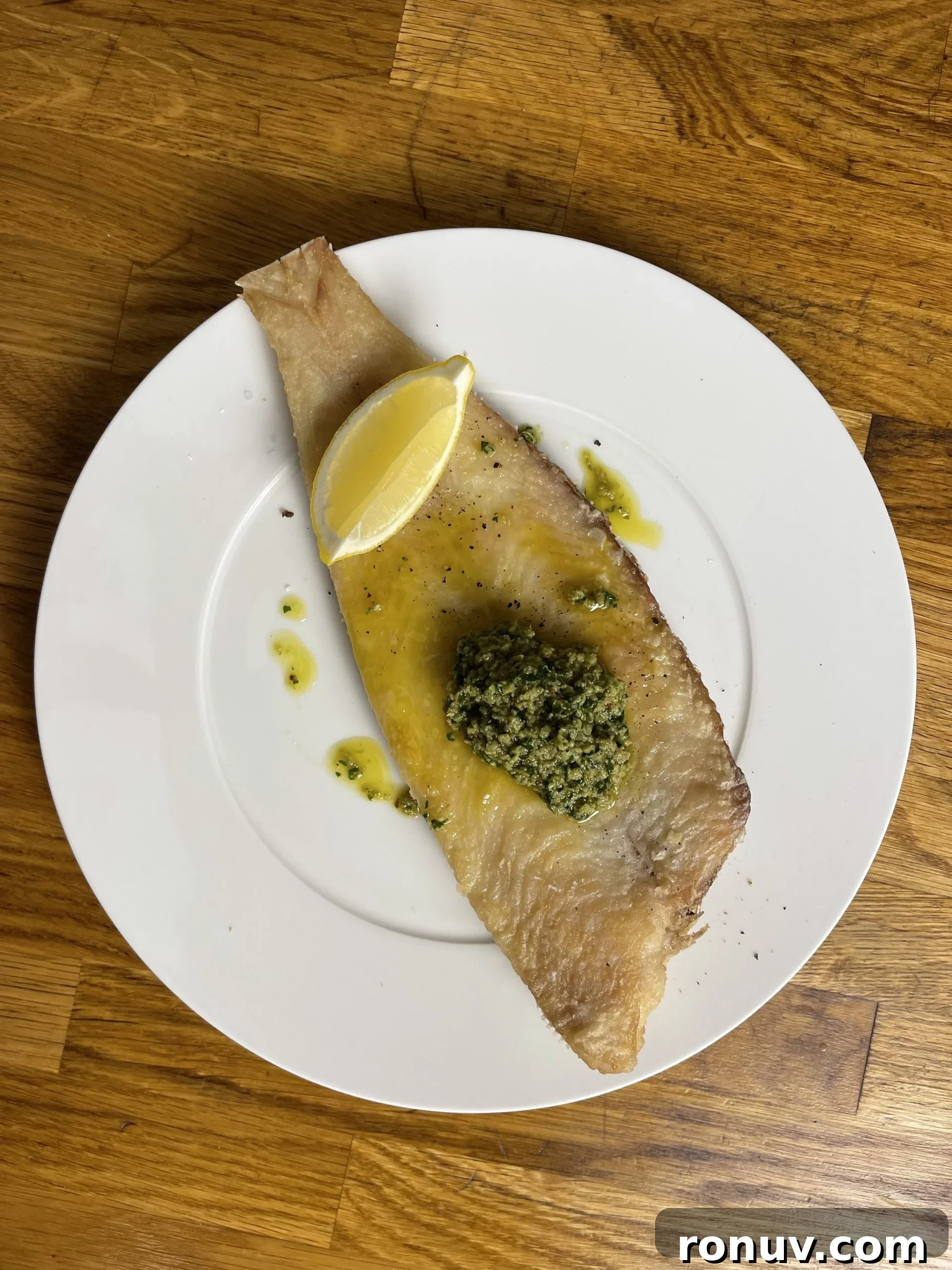
My mum always makes this pan-fried Cornish sole because it is affordable, simple and absolutely delicious. The fillets are delicate and mild, and when quickly fried they develop a lovely texture and flavor that pairs perfectly with a bright olive tapenade. I recently learned that roughly 90% of Cornish sole from the UK is exported to Spain, which is surprising given how well it cooks. It’s unfortunate that the fish’s unusual appearance and its former name, “megrim sole,” have put some people off. Taste is what matters most, though, and this recipe showcases why Cornish sole deserves more attention at British fishmongers and home kitchens.
INGREDIENTS
- 4 Cornish soles, cleaned and prepared
- 4 tbsp plain flour
- Salt to season
- 100 ml olive oil
- For the tapenade
- 1 tbsp capers
- 3 sprigs parsley
- 11 green pitted olives
- 1 small garlic clove
- A squeeze of lemon juice
- A pinch of black pepper
- A pinch of chili flakes
- 25 ml extra virgin olive oil
Preparation
-
Make the tapenade first so the flavors have a moment to come together. In a food processor, combine the capers, parsley, green olives, garlic clove, a squeeze of lemon juice, black pepper and chili flakes. Pulse for about 10 seconds—leave the mixture slightly coarse rather than completely smooth. Drizzle in the extra virgin olive oil and pulse once or twice to bind the mixture. Taste and adjust seasoning if needed. The tapenade should be bright, salty and slightly punchy to complement the mild sole.
-
Season the sole on both sides with a little salt. Lightly coat each fillet in plain flour and shake off any excess. The thin flour coating gives the fish a light golden crust while keeping the interior moist and tender.
-
Heat a wide frying pan over medium–high heat and add the olive oil. When the oil is hot but not smoking, lay the soles in the pan. Fry for about 3 minutes on the first side until golden and crisp, then flip carefully and cook for about 1 minute on the other side. Cooking times will vary slightly depending on the thickness of the fillets; the fish is done when the flesh turns opaque and flakes easily with a fork. Avoid overcooking to preserve the delicate texture.
-
Remove the soles from the pan and briefly blot with kitchen paper to remove excess oil. Serve immediately with a generous spoonful of the olive tapenade on the side or dolloped on top, and a wedge of lemon to squeeze over. The citrus brightens the dish and balances the savory tapenade.
Tips: Choose fresh-looking fillets from a reputable fishmonger. If your sole fillets are very thin, reduce the frying time slightly. For a lighter version, pan-sear with a mix of olive oil and a little butter for added flavor. The tapenade can be prepared a few hours ahead and refrigerated—bring it to room temperature before serving so the olive oil loosens and the flavors open up.
Serving suggestions: This sole is excellent with simple sides that don’t overpower the fish. Try steamed new potatoes, a crisp green salad, or sautéed seasonal greens. A slice of crusty bread is also useful for mopping up any remaining tapenade and juices.
Variations: If you prefer a spicier tapenade, increase the chili flakes or add a pinch of smoked paprika. For a herbier profile, add a few basil leaves or a little extra parsley. The base recipe is flexible and designed to enhance the gentle flavor of Cornish sole without overwhelming it.