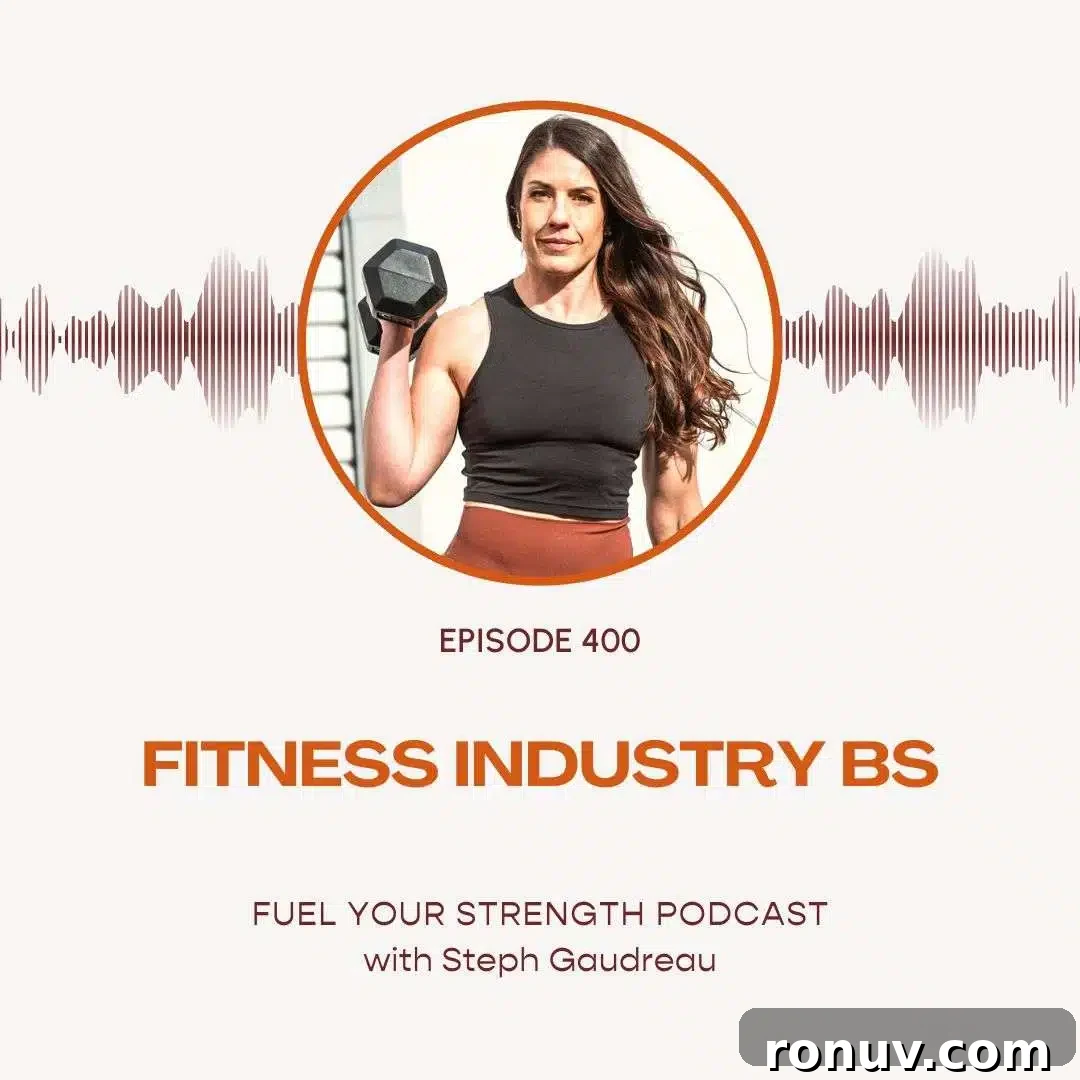
Today we celebrate a milestone: episode 400 of the podcast. Over the years the show has changed names and formats, but its core mission has stayed the same—helping you get stronger. In this episode I reflect on the journey so far, share lessons learned, and outline how I hope the conversation around strength, nutrition, and women’s fitness continues to improve.
Listen on your preferred podcast app: Apple Podcasts, Spotify, Stitcher, or from the podcast page. No app required to listen if you prefer streaming from the show page.
Want a free week of strength workouts? Click to sign up for the dumbbell program on the podcast site.
To improve the narrative around fitness we need to:
- Teach clients that fitness is not primarily an aesthetic goal
- Acknowledge and learn from people who have influenced the field
- Accept that perspectives evolve with new evidence
- Incorporate fresh research while acknowledging gaps in knowledge
Gauging Strength and Fitness Outside of Weight-Loss
Longtime listeners know I want to shift the fitness conversation away from calories and scales and toward functional markers: strength, movement quality, energy, and performance in daily life. This is a cultural change that won’t happen overnight, but coaches can lead it by educating clients about why alternative measures matter and by consistently using better language when describing goals and outcomes.
While it’s tempting to adopt industry buzzwords to attract clients, that perpetuates the same limiting narrative. If coaches are willing to explain why strength and performance-based goals are valuable, the broader conversation can shift over time.
Changing the Culture Moving Forward
I’d like to see more women included in exercise science and sports research, and I’m encouraged by recent shifts. At the same time, new findings must be interpreted carefully and placed in context. Some emerging trends—like prescriptive, week-by-week training and nutrition adjustments tied to the menstrual cycle—are attractive because they finally acknowledge women’s needs, but the evidence to support rigid, universal recommendations is still limited. We need nuance: apply research where it’s robust, and treat many recommendations as individualized (“n=1”) rather than blanket rules.
How can you help change the narrative around strength? How is the industry evolving where you are? Share your thoughts in the comments or via direct message.
In This Episode
- Educating clients on nutrition and strength beyond weight loss [4:30]
- Women who have inspired and influenced my work [18:40]
- Recognizing and embracing change in coaching and practice [23:00]
- Looking ahead at how nutrition and strength training are changing [28:15]
Quotes
“We as coaches have to be willing to do the education piece and constantly talk about why we’re not going to do things in this other way and why we’re doing things in this different way.” [4:50]
“Fitness is not a specific look. Fitness is how well you can perform a task; how well-suited to the task are you.” [12:08]
“If you need to make adjustments to your training because you’re not feeling it, that’s okay. But a lot of the things that we hear people talking about are just not grounded in what the collective body of research says.” [32:17]
Featured on the Show
Apply for the Strength Nutrition Unlocked program to get group coaching, community support, and practical strategies to build muscle and strength while improving recovery and energy.
Full show notes are available on the podcast website.
Follow Steph on social platforms for updates, clips, and community conversation.
Please consider rating and reviewing the show on your podcast app if you find the content helpful—this helps the podcast reach more people who want to get stronger and healthier.
Podcast production and marketing support provided by the production team.
Support the Podcast
Get discounts and offers from select partners via the podcast support page. Use discount codes listed on the show page to save on supplements, recovery devices, and gear.
Follow Steph on Instagram for short-form content, training cues, and episode highlights.
Related Episodes
See recent episodes that explore overtraining, transitioning from endurance training to lifting, and why the fitness industry needs better coaching standards.
Fitness Industry B.S. – Transcript (Condensed)
It’s been nearly eight years since the first episode. This podcast has evolved from different names and formats, but the central goal has stayed constant: help people build strength, muscle, and the resilience to perform well in life. Today I reflect on lessons learned, leaders who inspired me, changes I’d make if I started again, and how to move the fitness narrative away from weight loss toward capability and health.
Who is this podcast for? If you’re a woman in your 40s who enjoys strength training and wants evidence-based nutrition and recovery strategies—this podcast is for you. We aim to replace limiting messages about “toning” and “shredding” with practical guidance on building muscle, improving energy, and becoming more athletic at any age.
One persistent challenge: coaches often feel pressured to use aesthetic-driven language because that’s what clients search for. That marketing pressure can make it hard to shift the narrative. I believe coaches have a duty to educate: ask what clients mean by “toned,” explain why strength and muscle matter, and be willing to lose some business if it means staying true to evidence-based practice.
Another theme: change is normal. My show has changed names and emphasis several times. If you put work out into the world, expect your ideas to evolve. Be transparent about that evolution—listeners and clients benefit when you share what you’ve learned.
We also need to be cautious about over-prescriptive trends. Women were excluded from much historical research, so recent efforts to create women-specific training and nutrition guidance are important. But when the evidence base is still emerging, avoid one-size-fits-all prescriptions. Instead, focus on individual responses, practical adjustments, and clear communication about what the research does and does not support.
Finally, my personal advice for long-term health: keep challenging yourself with progressive resistance, pursue activities that build cardiovascular fitness and mobility, prioritize good nutrition and recovery, and continue learning. Whether you’re aiming to be a stronger 64- or 84-year-old, progressive overload, sensible recovery, and curiosity will keep you capable and independent.
Thank you for listening and being part of this journey. If you want coaching to apply these ideas, consider applying to Strength Nutrition Unlocked. Subscribe to the podcast on your favorite app, share episodes with friends, and let me know how the podcast has helped you—DM me on social or leave a comment on the show page.
Until next time, stay curious, keep learning, and stay strong.