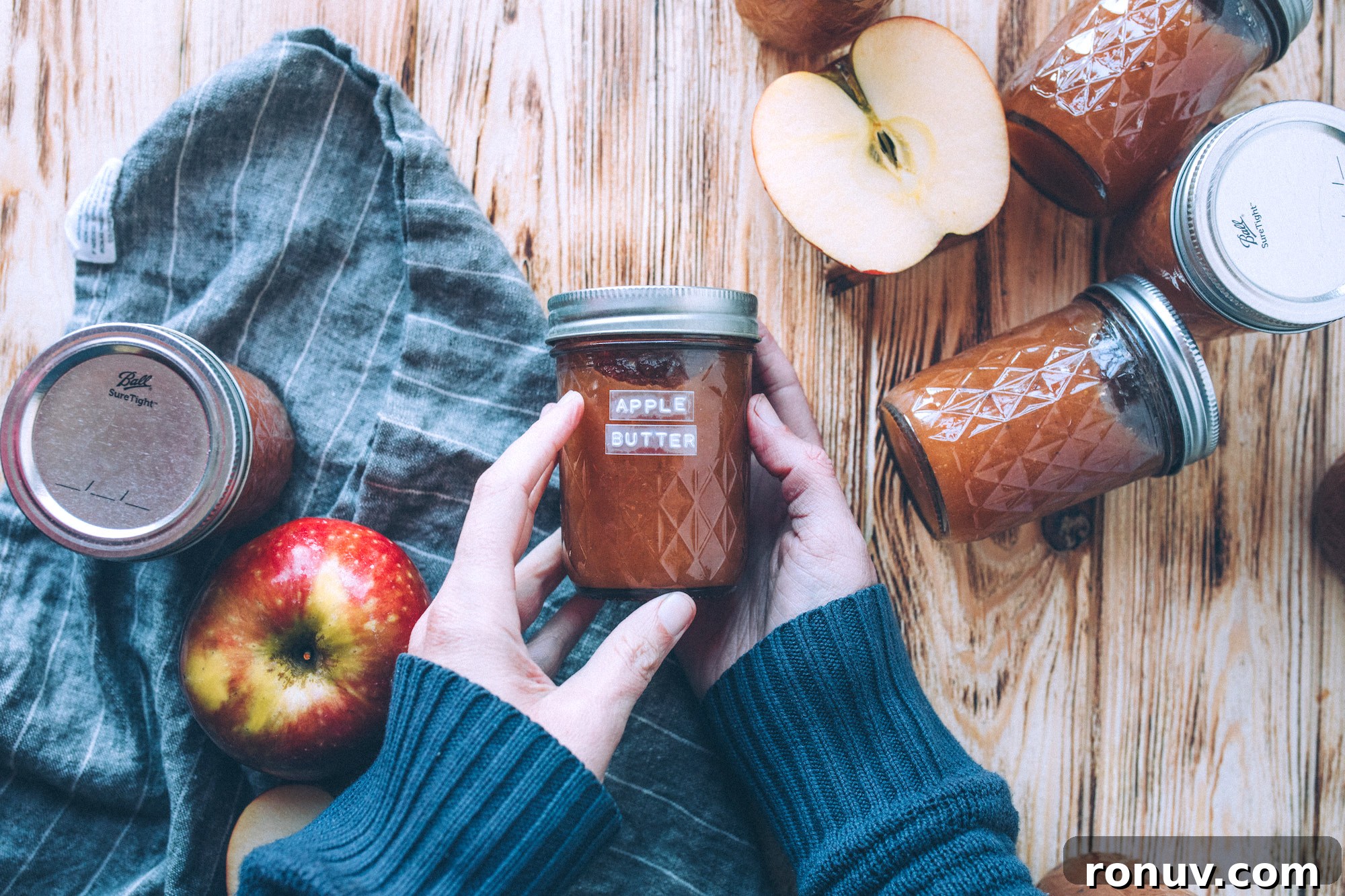
Apple butter is a delicious way to preserve apples at home, concentrating their flavor into a silky spread that’s perfect year-round.
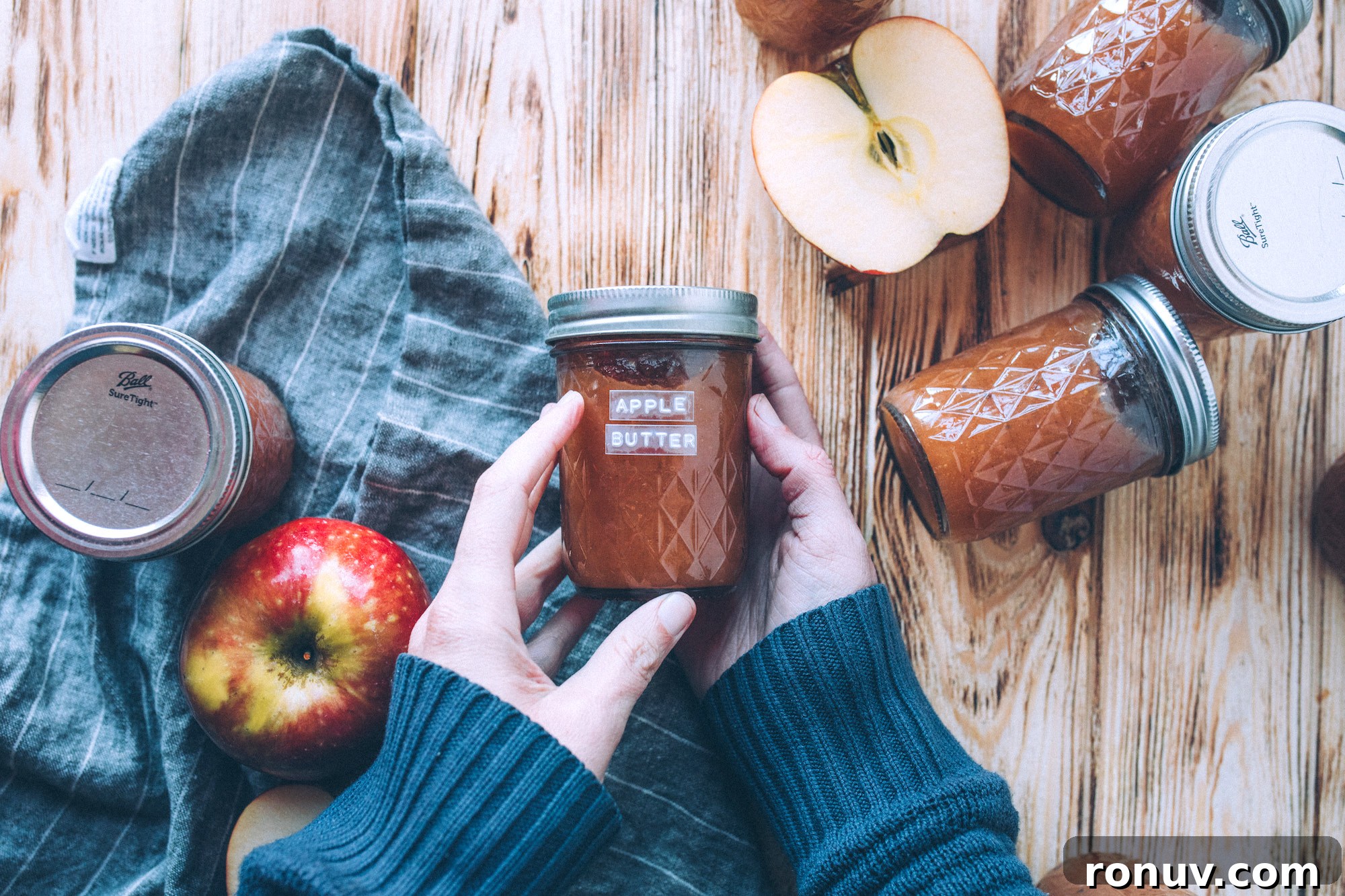
Apple butter is one of the highlights of fall. Its rich, caramelized apple flavor is wonderful on toast, stirred into baked goods, or used as a condiment. The preserve dates back centuries; older recipes were often more savory and used vinegar for preservation before modern canning methods existed. Today, most recipes produce a sweet, spiced spread that stores well in jars.
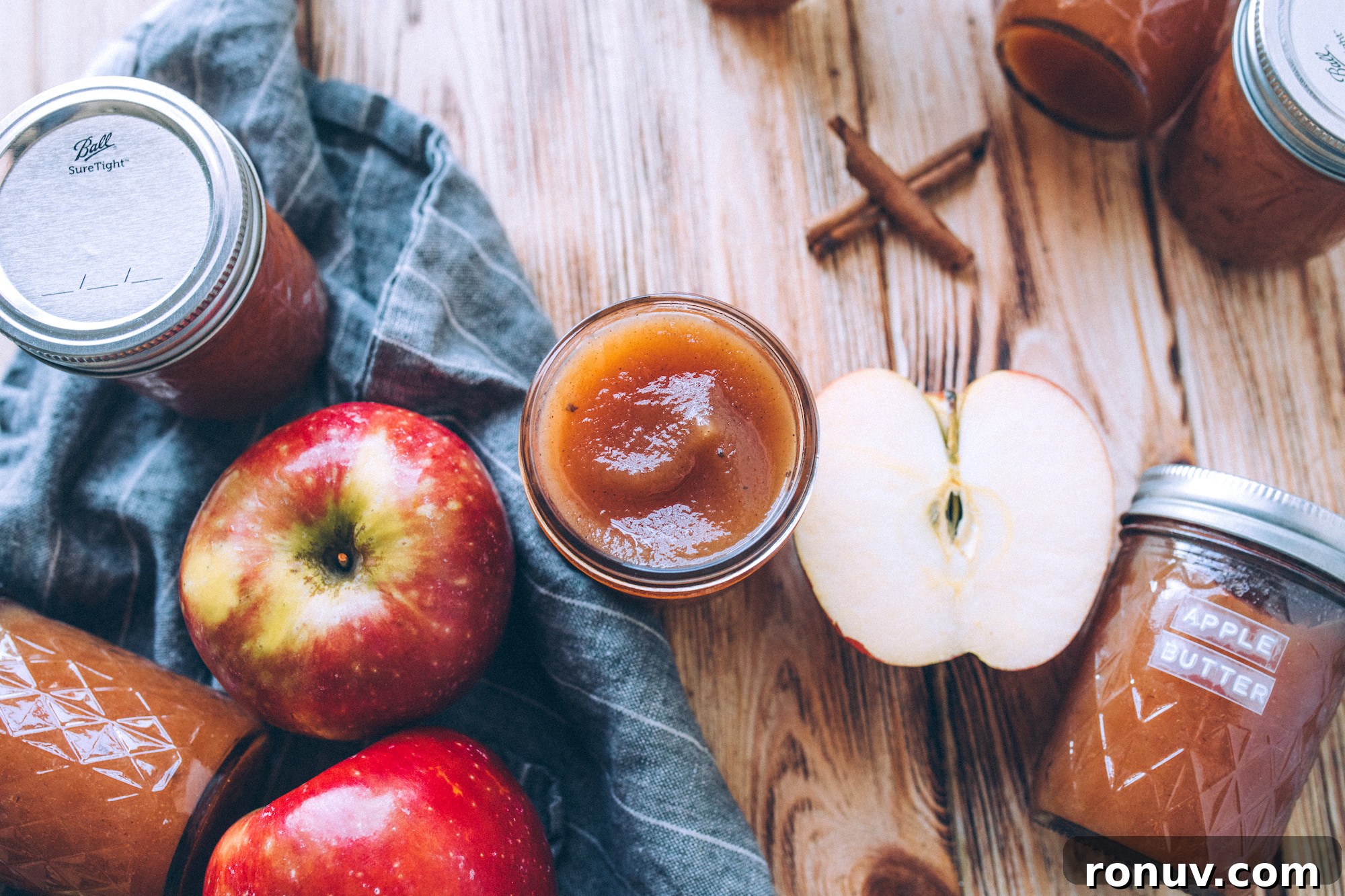
Basic Recipe for Apple Butter
Making apple butter at home is straightforward: cook apples down into a sauce, then slow-cook that sauce until the natural sugars concentrate and the mixture thickens into a smooth butter. Adding sweet apple cider, sugar, and a touch of warm spices speeds up the process and deepens the flavor.
This version is a tested, simple recipe that works on the stovetop, in a slow cooker, or with an electric pressure cooker plus slow-cook function. It yields jars of richly flavored apple butter that can be refrigerated, frozen, or water-bath canned for long-term storage.
Ingredients for Apple Butter
To make about eight half-pint (8 oz) jars of apple butter, you will need:
- 6 pounds apples (about 18–24 medium apples)
- 2 cups sweet apple cider
- 3 cups granulated sugar
- 1 ½ teaspoons ground cinnamon
- ½ teaspoon ground cloves
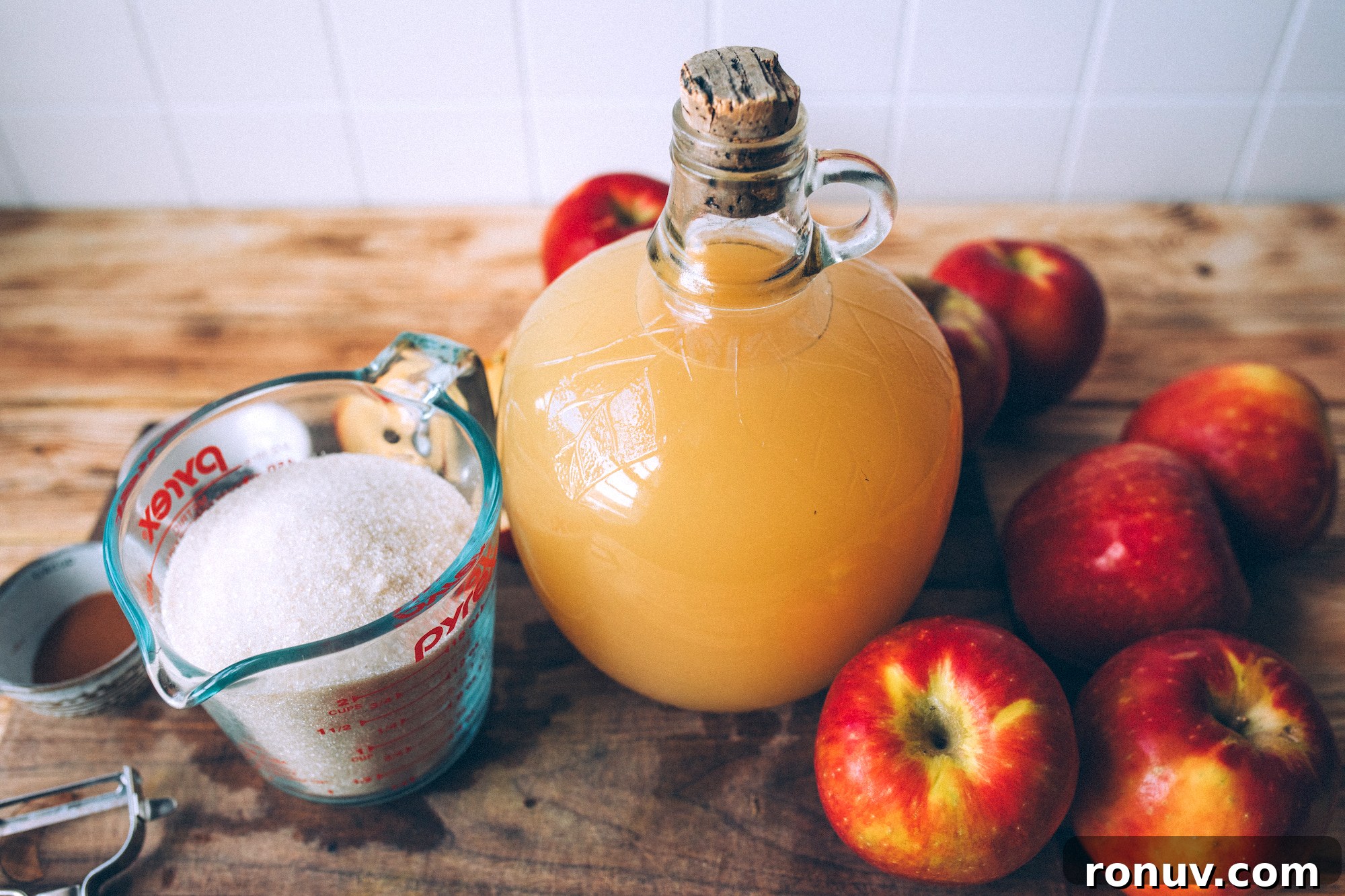
Use any combination of apples you like. Softer, sweeter apples such as Gala, Fuji, McIntosh, Golden Delicious, and Jonagold break down easily and make a smooth butter. Firmer varieties like Braeburn, Cortland, or Pink Lady will work fine but may need a little longer cooking or mashing. Granny Smith apples add pleasant tartness if you prefer less sweetness. Spices are optional and can be adjusted to taste—consider nutmeg, ginger, or allspice as alternatives or additions.
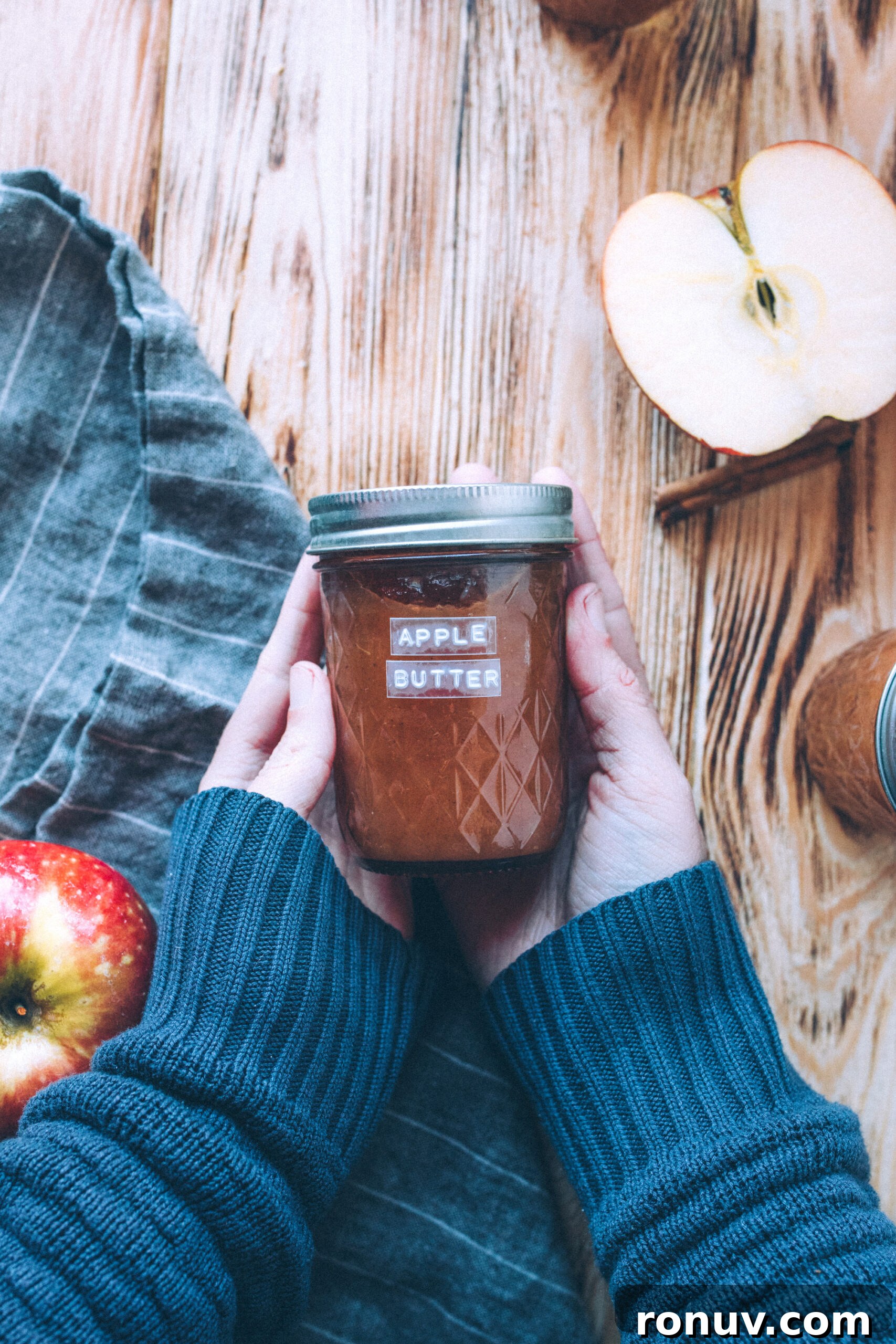
How to Make Apple Butter
The process breaks down into a few clear steps:
- Prepare the apples
- Cook apples into applesauce
- Slow-cook the sauce with sugar and spices until it thickens into apple butter
Preparing Apples
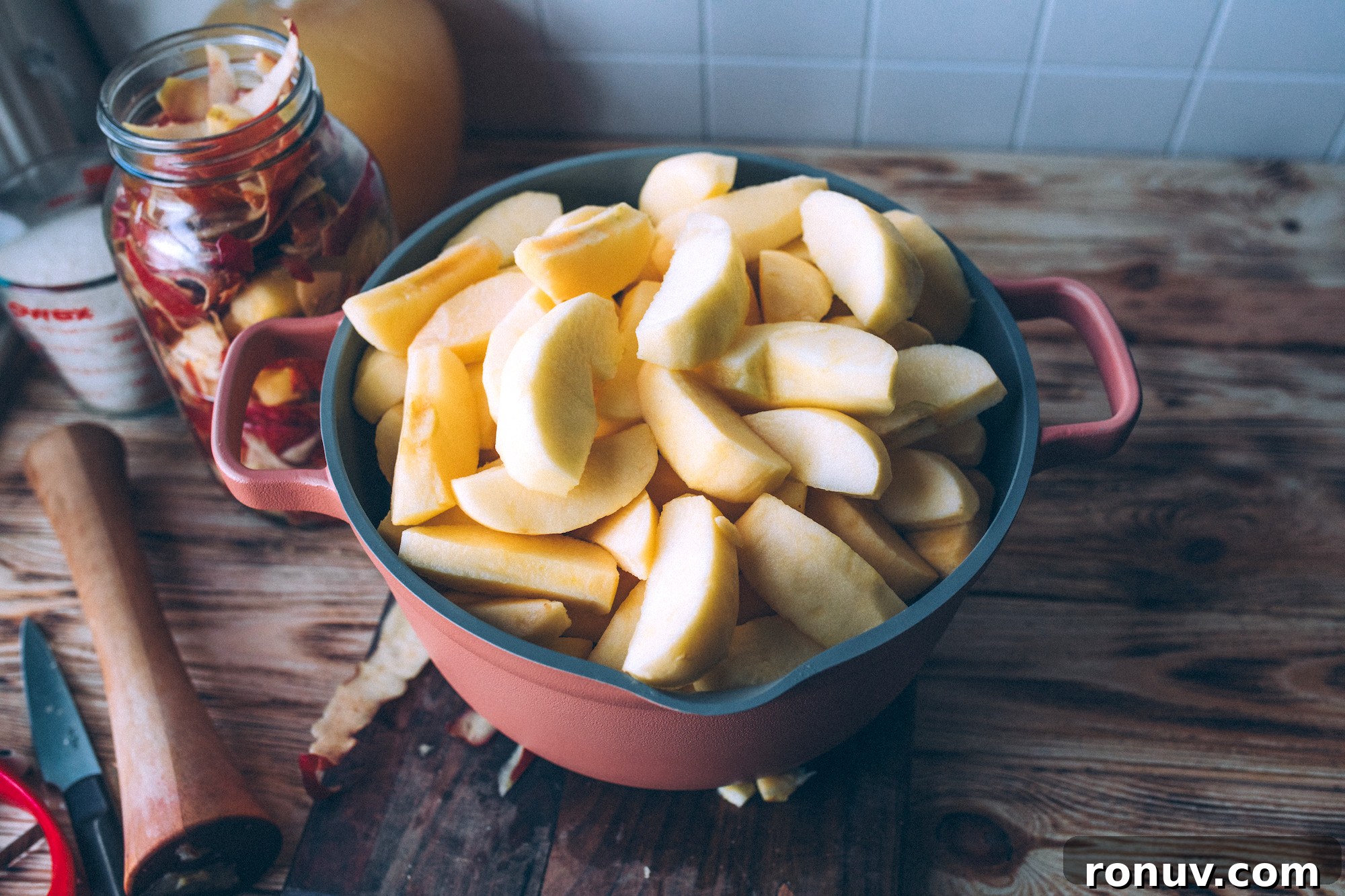
Rinse apples and inspect for bruises or soft spots. Cut away any damaged areas, then peel and core the apples. An apple peeler-corer can speed this up, but you can also quarter and core by hand. Compost peelings and cores if possible.
Cooking the Apples
Place apple pieces in a large saucepan with 2 cups of sweet apple cider. Bring to a gentle boil over medium-high heat, then reduce to medium-low and simmer until apples are very soft and breaking down, about 25–40 minutes on the stovetop. You can alternatively cook apples and cider in a slow cooker on high for 3–4 hours, stirring occasionally, for a hands-off approach.
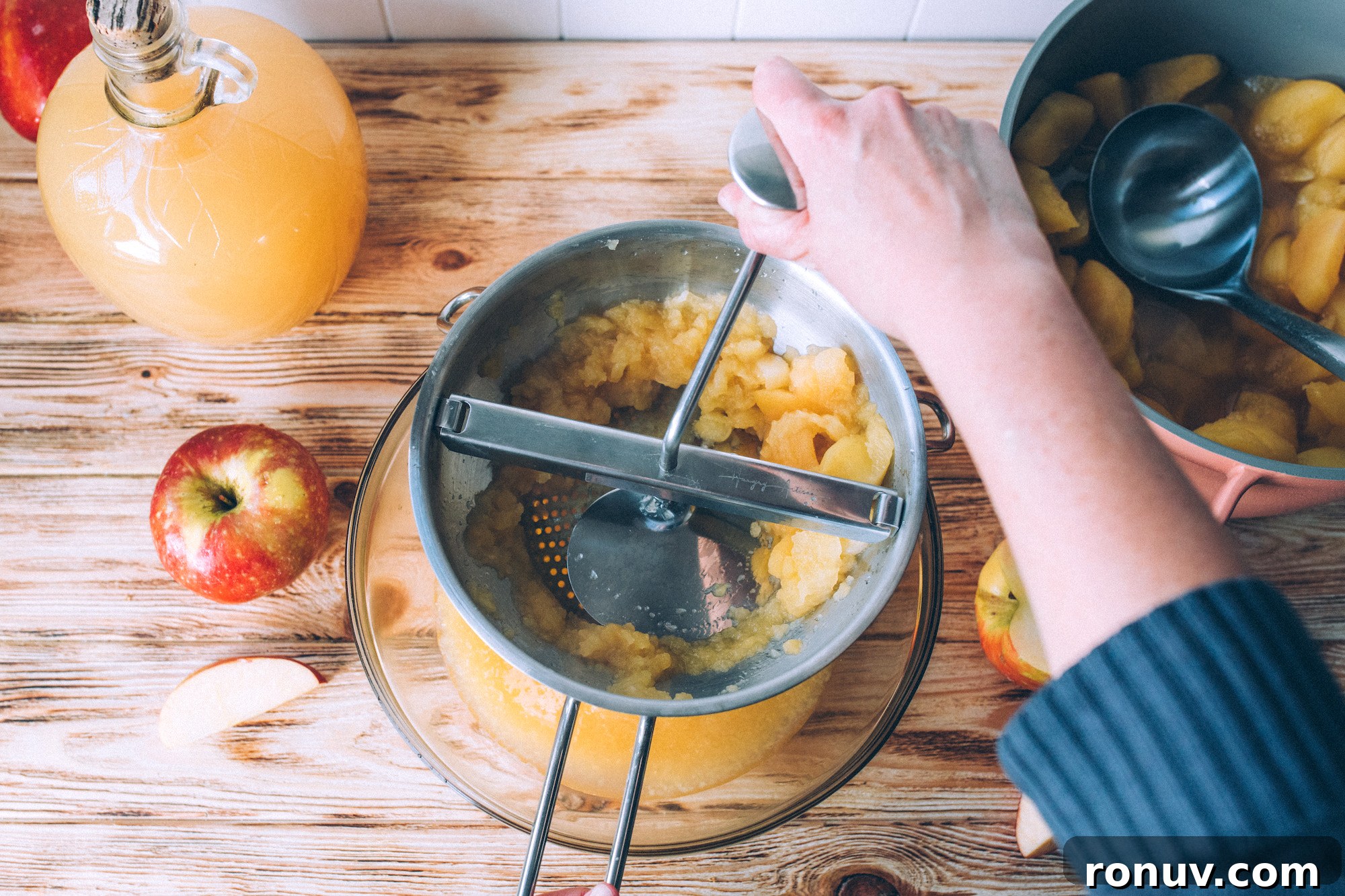
When the apples are soft, puree them with an immersion blender, food processor, or pass them through a food mill for an extra-smooth texture.
Measure out about 3 quarts of the pureed apple mixture into a large saucepan. Add the sugar, ground cinnamon, and ground cloves. Heat to medium-high and stir until the sugar dissolves. Reduce to a low boil and continue cooking, stirring frequently to prevent scorching. On the stovetop this typically takes 15–40 minutes to reach a thick, spreadable consistency; stovetops and apple juiciness will affect timing.
Test thickness by scooping a spoonful: if the apple butter mounds and holds shape, it’s ready. If too thick, thin with a splash of apple cider. When finished, ladle into prepared jars, leaving ¼ inch headspace. Wipe rims, apply lids, and either refrigerate, freeze, or process in a water bath canner for shelf stability.
Canning Apple Butter
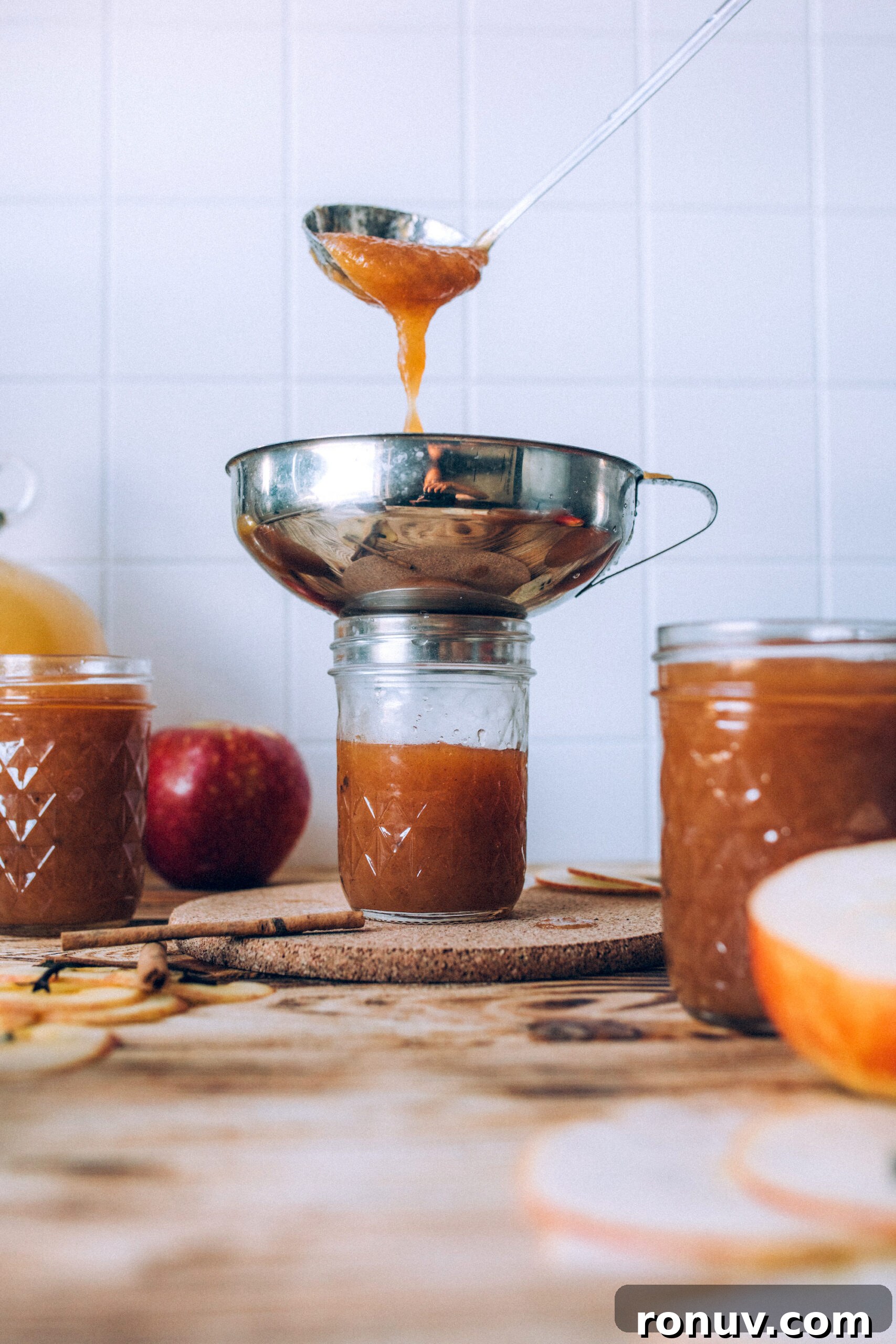
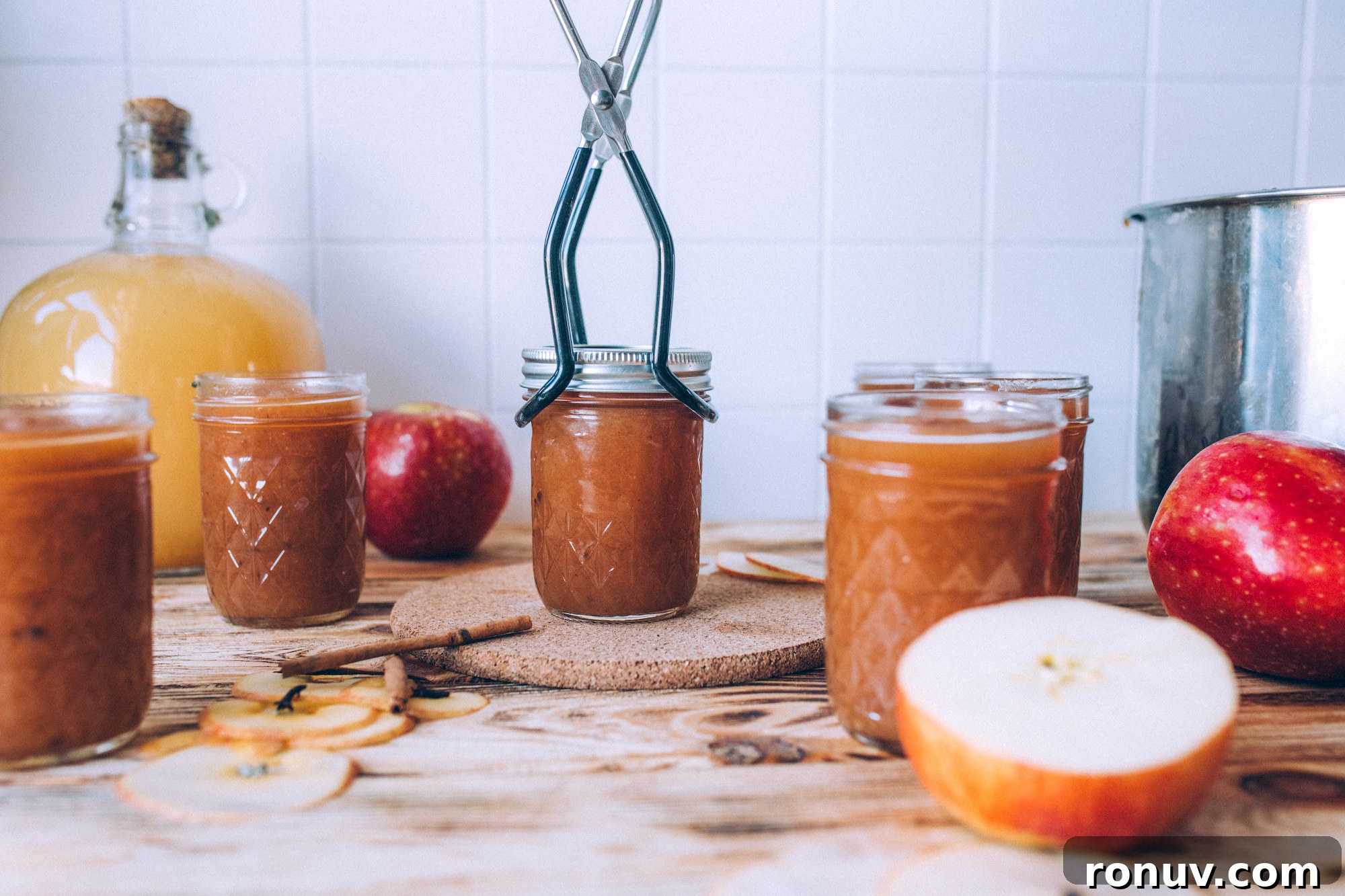
Canning preserves apple butter for up to 18 months when jars are properly processed and stored in a cool, dry place. Prepare jars and a water bath canner before filling. Fill hot jars with hot apple butter, leaving ¼ inch headspace, wipe rims, and apply lids. Process pints and half-pints in a boiling water bath—see altitude adjustments below. After processing, let jars sit five minutes in the water, then remove and cool undisturbed. Check seals after 24 hours and refrigerate any jars that did not seal.
Altitude Adjustments for Canning
Process times for water-bath canning vary by elevation. For pints and half-pints:
- Under 1,000 feet: 15 minutes
- 1,001–3,000 feet: 20 minutes
- 3,001–6,000 feet: 25 minutes
- Above 6,000 feet: 30 minutes
If canning quarts, add 5 minutes to each listed time.
Other Ways to Make Apple Butter
Slow Cooker
Cook apples with cider in a slow cooker on high for 3–4 hours until soft. Puree, then add sugar and spices and cook another 1–2 hours until thickened.
Instant Pot
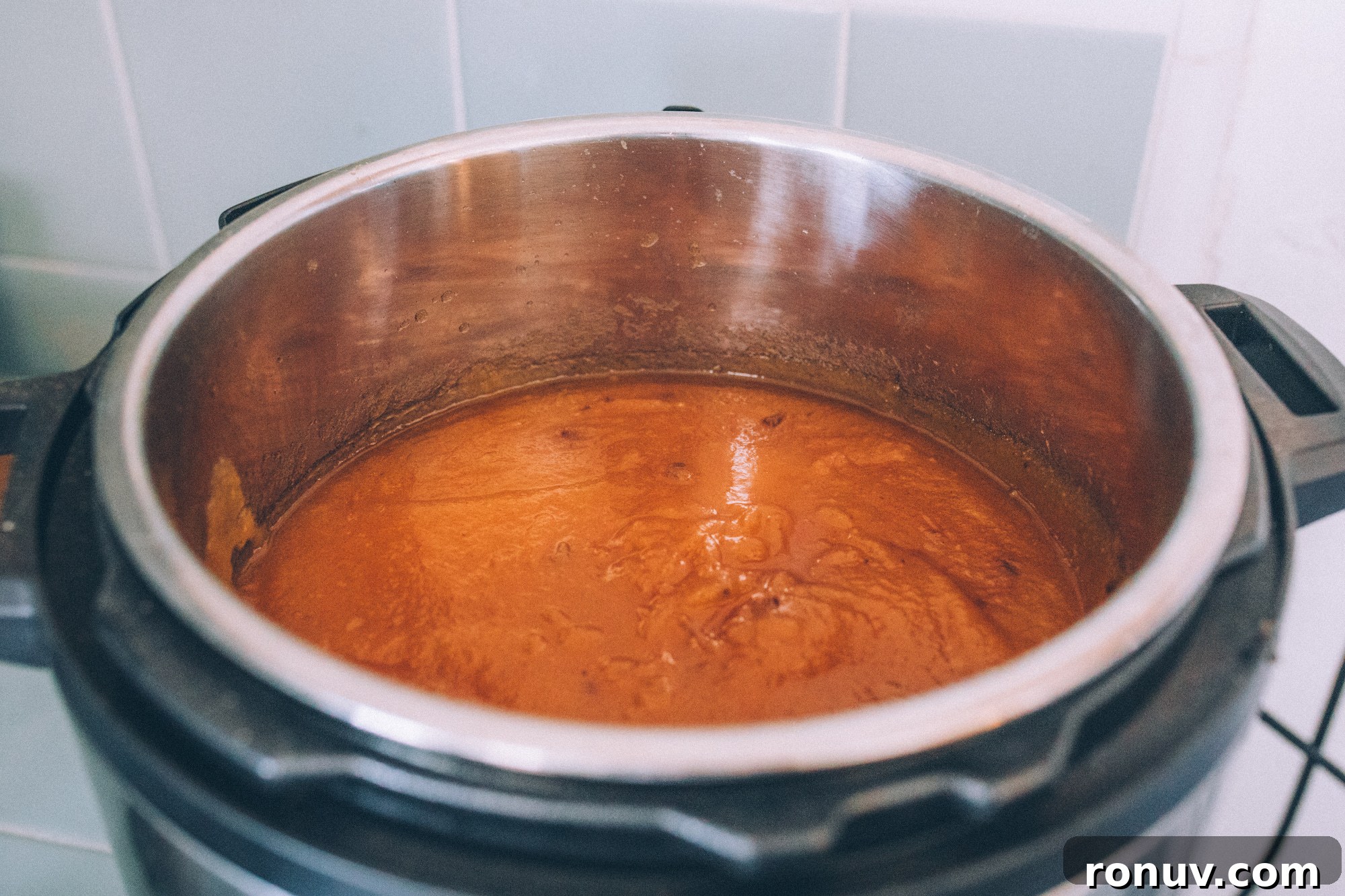
Pressure-cook peeled and cored apples with cider on high pressure until very soft (times vary by model). Release, puree, then use the slow-cook or sauté function with sugar and spices to reduce to the desired thickness.
Apple Butter Variations
Try substituting some pears for apples to sweeten and soften the flavor, or add ½ to 2 cups of cranberries during the initial cooking for color and tartness. Maple syrup, molasses, or brown sugar can add depth. Adjust spices to taste—nutmeg, allspice, or ginger work well, but use sparingly since flavors intensify as the butter cooks.
Ways to Use Apple Butter
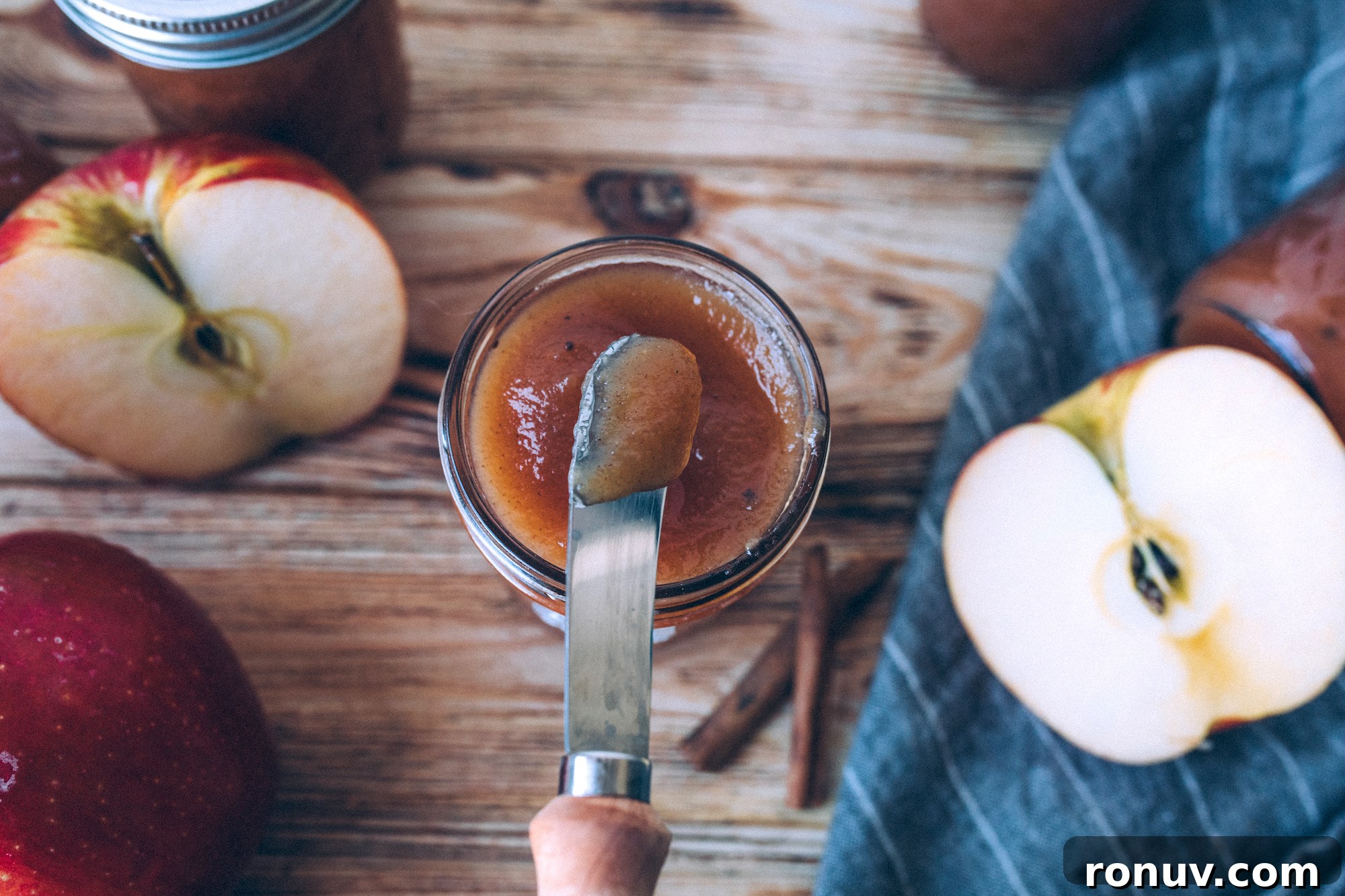
Apple butter is classic on toast, English muffins, and waffles. Try it on pancakes with or without maple syrup, stirred into muffins or quick breads for moisture and flavor, or as a swap for jam in sandwiches—peanut butter and apple butter is a family favorite.
Recipe
Equipment
- Large saucepan or stockpot
- Food mill, food processor, or immersion blender
- Water bath canner and jars (if canning)
Ingredients
- 6 lbs apples, peeled and cored
- 2 cups sweet apple cider
- 3 cups granulated sugar
- 1 ½ tsp ground cinnamon
- ½ tsp ground cloves
Instructions
- Rinse apples, peel and core them, and cut into quarters or smaller pieces.
- Place apples and cider in a large saucepan and bring to a gentle boil. Reduce heat and simmer until very soft, stirring occasionally (20–40 minutes on the stovetop or 3–4 hours in a slow cooker on high).
- Puree the cooked apples using a food mill, food processor, or immersion blender until smooth.
- Measure about 3 quarts of the apple puree into a clean large saucepan. Add sugar, cinnamon, and cloves and stir to combine.
- Bring to a gentle boil, then reduce to a low boil and cook, stirring frequently, until the apple butter thickens and mounds on a spoon (15–40 minutes on the stovetop; longer if apples are very juicy).
- Adjust thickness with a splash of cider if too thick. When done, ladle into jars leaving ¼” headspace. Wipe rims and apply lids.
- For shelf-stable storage, process jars in a boiling water bath according to elevation-adjusted times. Otherwise refrigerate and use within a month or freeze for up to six months.
Apple Butter FAQ
How long do you have to cook apple butter?
Times vary by apple type and ripeness. Softening apples to puree takes about 20–40 minutes on the stovetop; reducing the puree to apple butter typically takes another 30–40 minutes on the stove or about 4 hours in a slow cooker.
How do you get a smooth apple butter?
Use a food mill, food processor, or immersion blender to remove lumps. A food mill often gives the best, lump-free texture without adding air.
Do you have to add sugar or vinegar?
Sugar is optional; sweet apples will produce a flavorful butter without added sugar, though cooking may take longer. Vinegar was used historically for preservation before canning and is not needed for modern apple butter; add lemon juice only if you want a bit more tartness.
Other Fruit Butter Ideas
- Pear butter
- Peach butter
- Blueberry butter
- Cherry butter