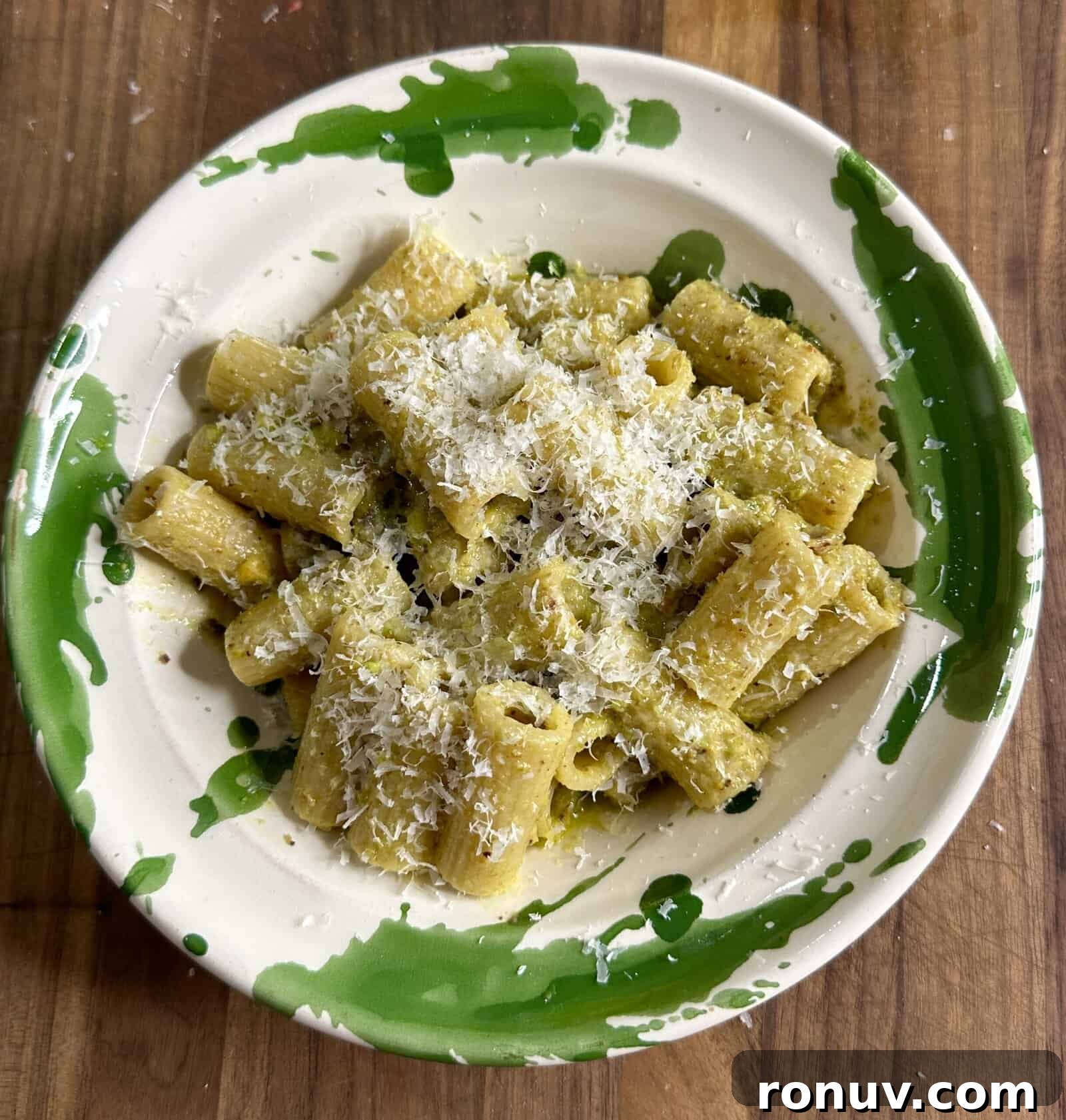
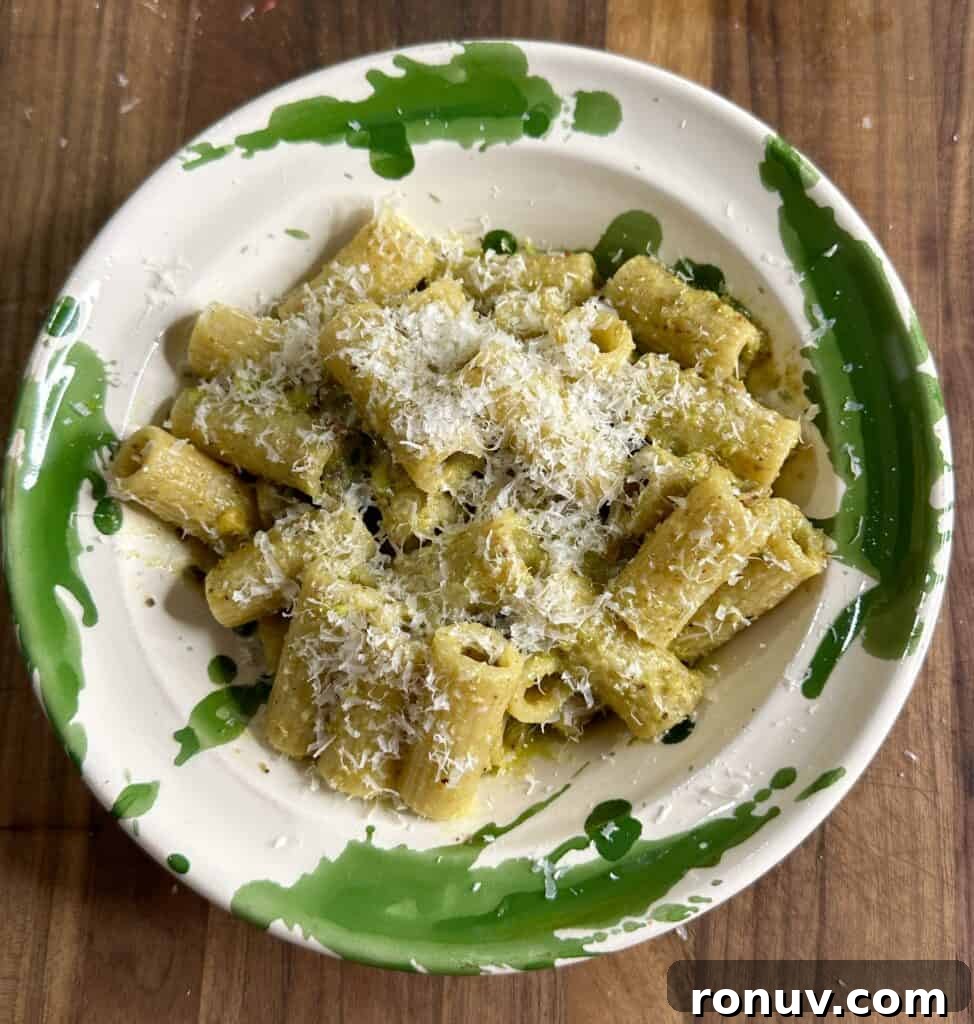
Pistachio Pesto Pasta is a beautiful example of how a few quality ingredients can deliver bold, memorable flavor. I recently tasted this version at a cozy West Village restaurant called Travelers, Poets, and Friends, where Chef Riccardo explained that the recipe dates back to the founder Emanuele’s mother and has become a favorite with regulars. The combination of roasted pistachios, bright lemon, fresh garlic, and good olive oil creates a creamy, vibrant sauce that clings to pasta and feels both rustic and refined.
Tips for Success
- Use quality pistachios: Dry-roasted, shelled pistachios add the most flavor and a natural bright green color.
- Pulse instead of purée: Brief pulses in a food processor keep a pleasant nutty texture—avoid over-blending into a smooth paste.
- Cook pasta carefully: Drain the pasta one minute before al dente so it finishes in the skillet with the pesto.
- Reserve pasta water: A small amount of starchy pasta water helps emulsify the oil and pistachios into a cohesive, silky sauce.
- Choose extra-virgin olive oil: A fruity, peppery extra-virgin oil elevates the overall flavor and gives the sauce a luxurious mouthfeel.
Dairy-Free Bonus
This pistachio pesto pasta is naturally dairy-free when you skip the optional Parmigiano garnish. The fattiness of the nuts combined with high-quality olive oil creates a rich, creamy texture without any dairy. If you want a nutty, plant-based meal that still feels indulgent, simply leave off the cheese or substitute a sprinkle of nutritional yeast for a savory, dairy-free finish.
Pistachio Pesto Pasta Recipe
Ingredients
- 1/2 cup dry roasted pistachios
- 1 tsp lemon juice
- 1 clove garlic, grated
- 1/2 cup extra virgin olive oil
- Small pinch of salt, or to taste
- 1/2 lb (about 225 g) pasta of your choice
- Reserved pasta water (about 1/4 cup)
- Parmigiano-Reggiano, for garnish (optional—omit for dairy-free)
Instructions
Step 1: Make the pistachio pesto
- Place the pistachios, lemon juice, grated garlic, olive oil, and a small pinch of salt into a blender or food processor.
- Pulse 5–10 times until the ingredients are combined but still slightly textured. You want a coarse, spreadable pesto rather than a completely smooth sauce.
Step 2: Cook the pasta
- Bring a large pot of salted water to a boil and cook the pasta until about one minute shy of al dente.
- Reserve about 1/4 cup of the starchy cooking water, then drain the pasta.
Step 3: Combine and finish
- Warm the pesto gently in a skillet over medium heat—do not let it boil.
- Add the drained pasta and a splash of the reserved pasta water. Toss vigorously to coat the pasta and emulsify the sauce, adding more pasta water as needed to reach a creamy consistency. Cook together for about one minute so the flavors meld.
Step 4: Serve
- Divide the pasta among plates and, if desired, grate Parmigiano-Reggiano over the top. Serve immediately while warm.
Nutrition (approx.)
Per serving: Calories: 716 kcal · Carbohydrates: 63 g · Protein: 14 g · Fat: 46 g · Fiber: 5 g. Nutrition values are approximate and will vary with ingredient brands and portion size.
What to Serve with Pistachio Pesto Pasta
This dish pairs beautifully with a crisp green salad to cut through the richness—think arugula, mixed greens, or a simple fennel and orange salad. For a heartier meal, serve with seared salmon or grilled chicken. A light, unoaked white wine such as Pinot Grigio or Sauvignon Blanc complements the nuttiness and citrus notes of the pesto.
Tried This Recipe? Share Your Feedback!
I’d love to hear how your pistachio pesto pasta turned out. Leave a comment below with your tweaks or tips, and if you share photos on social media, tag the cook or recipe source so others can find your version. Buon appetito!