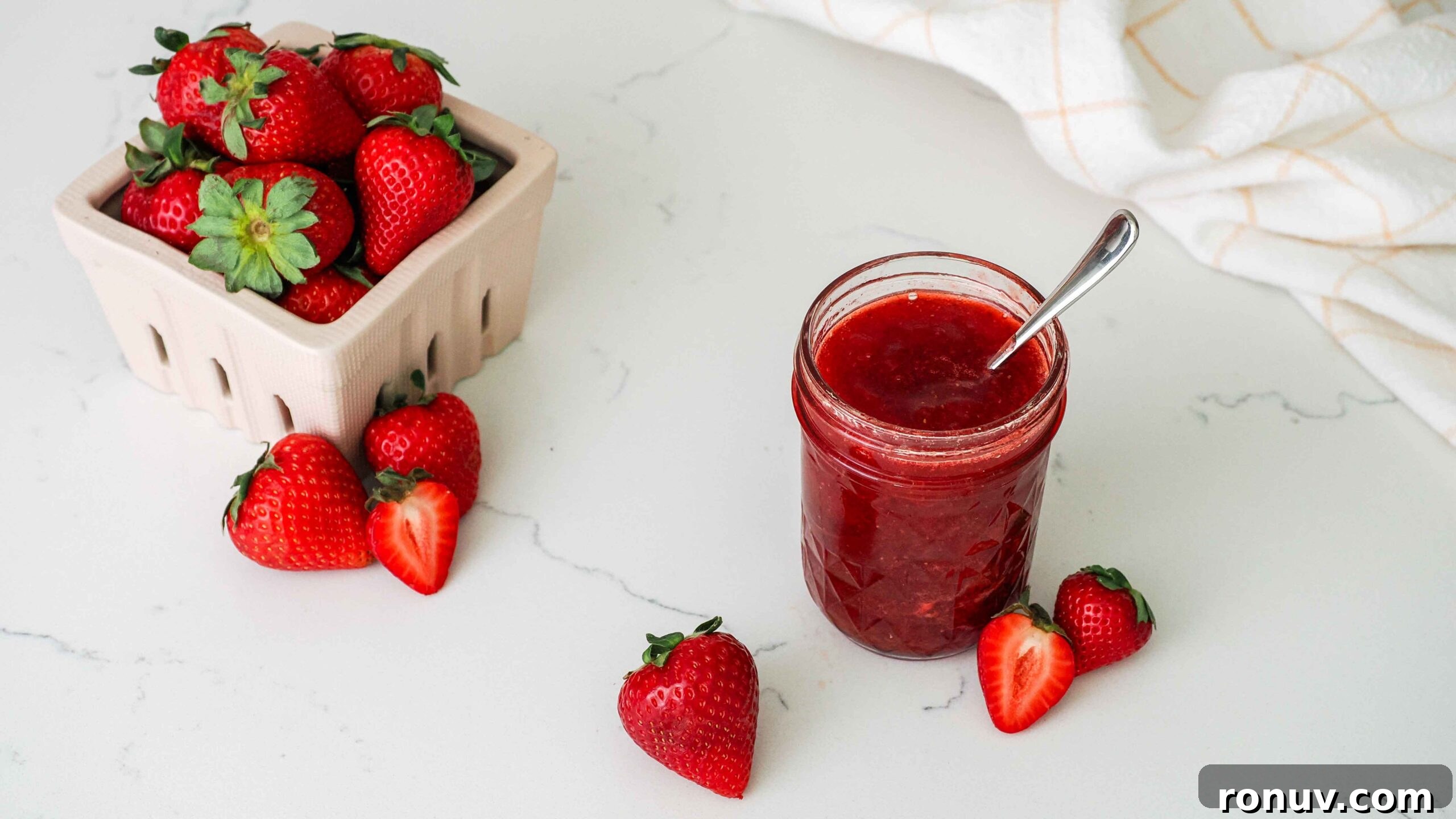
My favorite way to preserve fresh strawberries is to turn them into jam. If you only have a pint of berries or you’ve already eaten most of the harvest, this small-batch strawberry jam is perfect — it makes just the right amount from one 16-ounce container of strawberries. Use it as a filling for macarons, swirl it into strawberry ice cream, top mini cheesecakes, or simply spread it on toast.
Like my small-batch cherry jam, this strawberry jam does not require added pectin to set. It’s a straightforward recipe that comes together in about 30 minutes with only three basic ingredients. Below you’ll find simple, practical tips to help the jam set beautifully and avoid common pitfalls, plus a clear recipe card to follow.
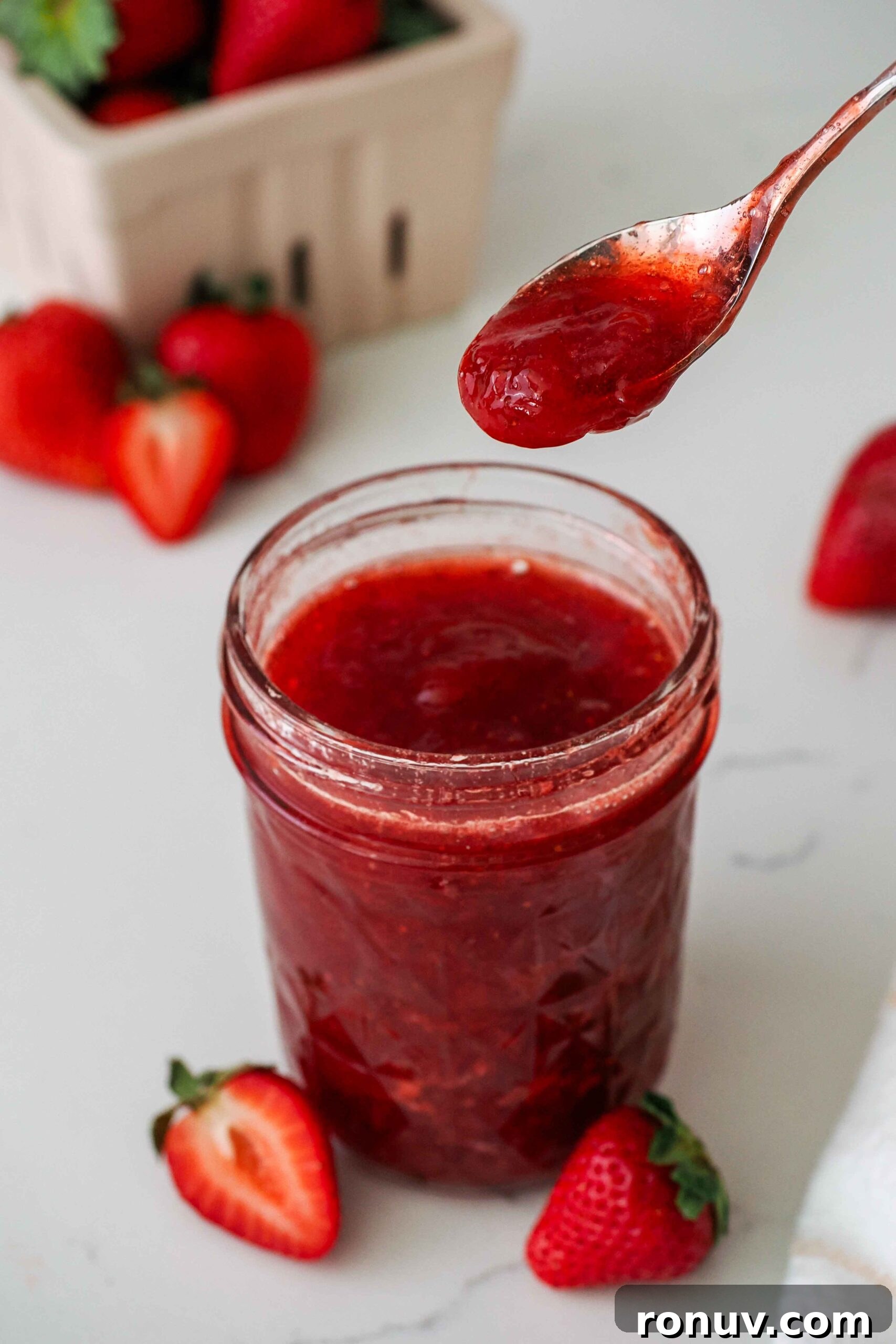
Ingredients for Strawberry Jam
Making strawberry jam at home is simple: fresh strawberries, granulated sugar, and a little lemon juice are all you need. Each ingredient plays an important role, so I explain what they do and offer substitution notes where appropriate.
- Fresh strawberries. Fresh berries give the best flavor and texture in this recipe. Frozen strawberries can work if thawed fully and drained, but fresh diced berries cook down more predictably and yield the ideal texture.
- Granulated sugar. Sugar sweetens the jam and helps it thicken and preserve. If you reduce the quantity or swap in liquid sweeteners or sugar substitutes, the jam may not set. For reliable results, use granulated sugar; light brown sugar is the only other sugar I recommend for a noticeable change in flavor.
- Lemon juice. A little acid brightens the fruit flavor and helps the jam gel. Fresh lemon juice is best, but bottled lemon juice will also work when fresh isn’t available.
Quick Tips for Prepping Strawberry Jam
Homemade jam with fresh fruit is very approachable. Prep the fruit, add sugar and lemon juice, and simmer until the mixture reaches the gelling point. There are no complicated techniques—just a bit of patience while the jam reduces.
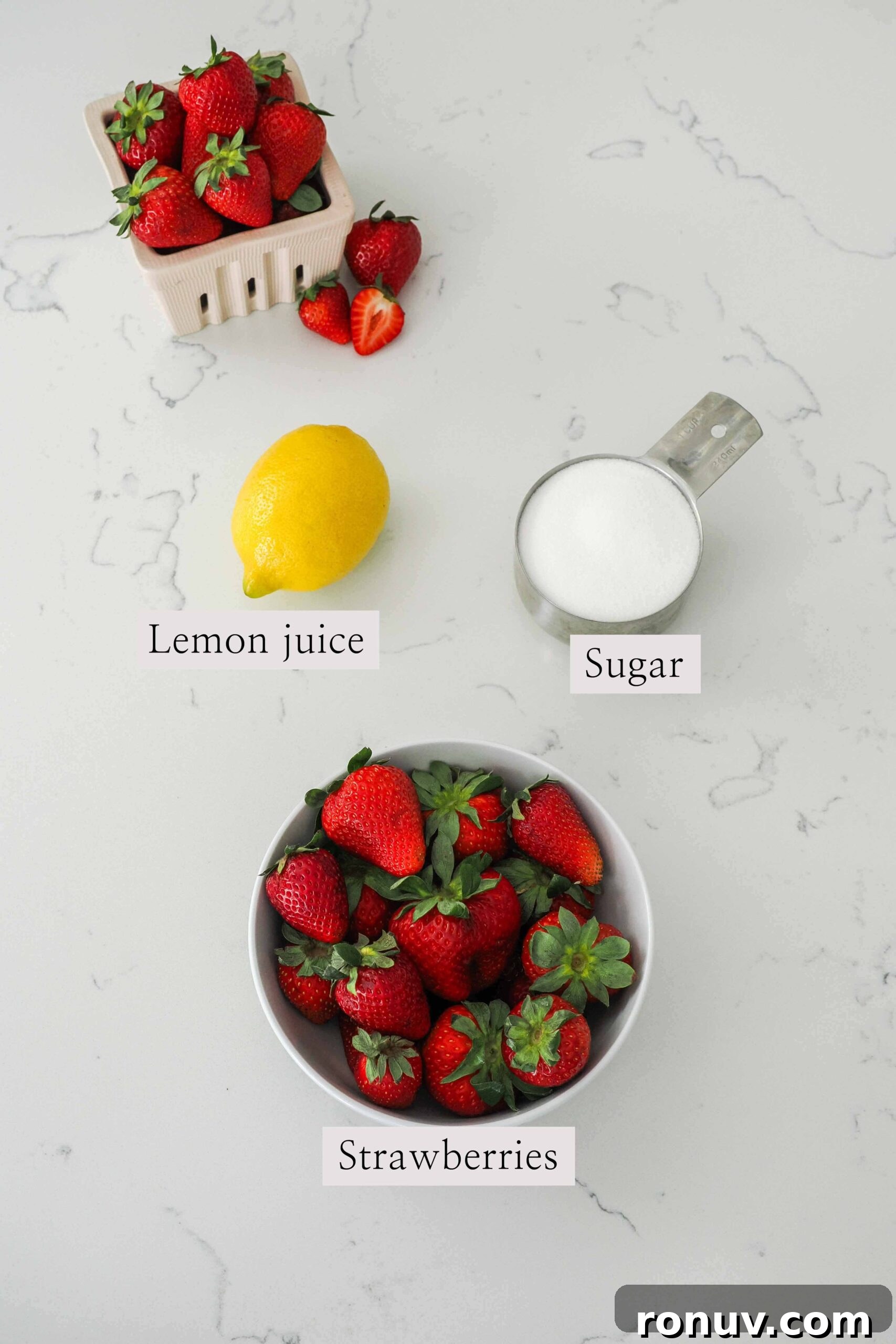
Begin with washed and thoroughly dried strawberries, then remove the hulls. Dice the berries into roughly 1/4-inch (6 mm) pieces so they cook evenly and break down into a consistent texture. For medium-size strawberries, halve them, then quarter or slice as needed to make uniform small pieces.
Combine the diced strawberries, sugar, and lemon juice in a medium-sized pot. Use a medium pot rather than a small saucepan: jam foams and expands while boiling and can bubble up dramatically, so you want enough headroom to prevent boilovers.
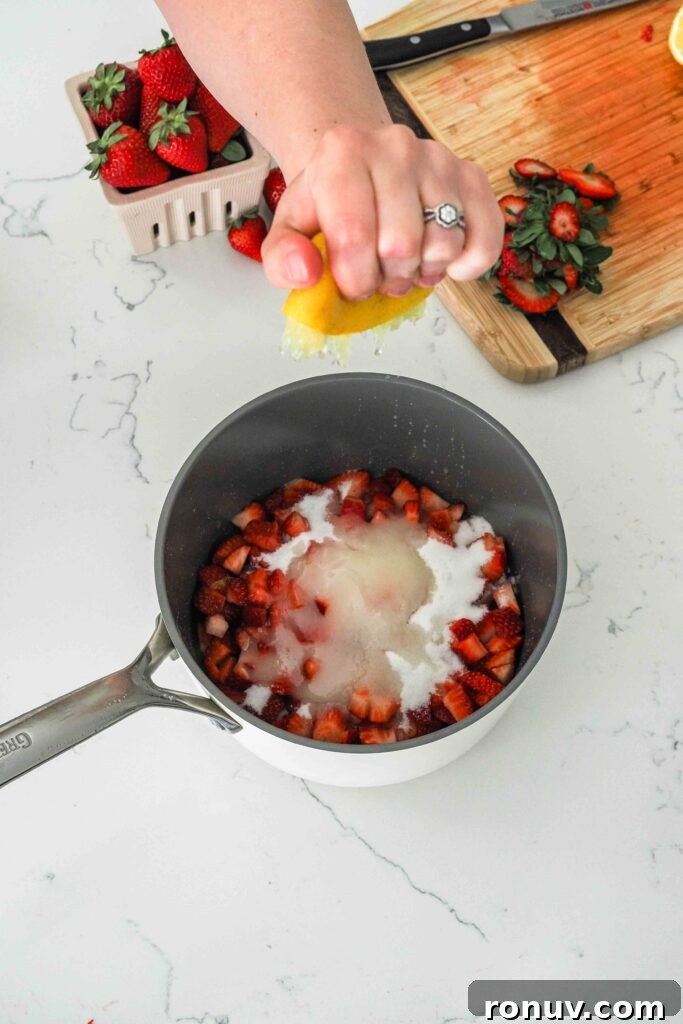
How to Make Small Batch Strawberry Jam
Set the pot over medium heat and cook, stirring occasionally, for about 10 minutes. You want the sugar to dissolve and the mixture to take on a bright, deep red color. After that, raise the heat slightly and bring the mixture to a rolling boil — a boil that continues even when you stir.
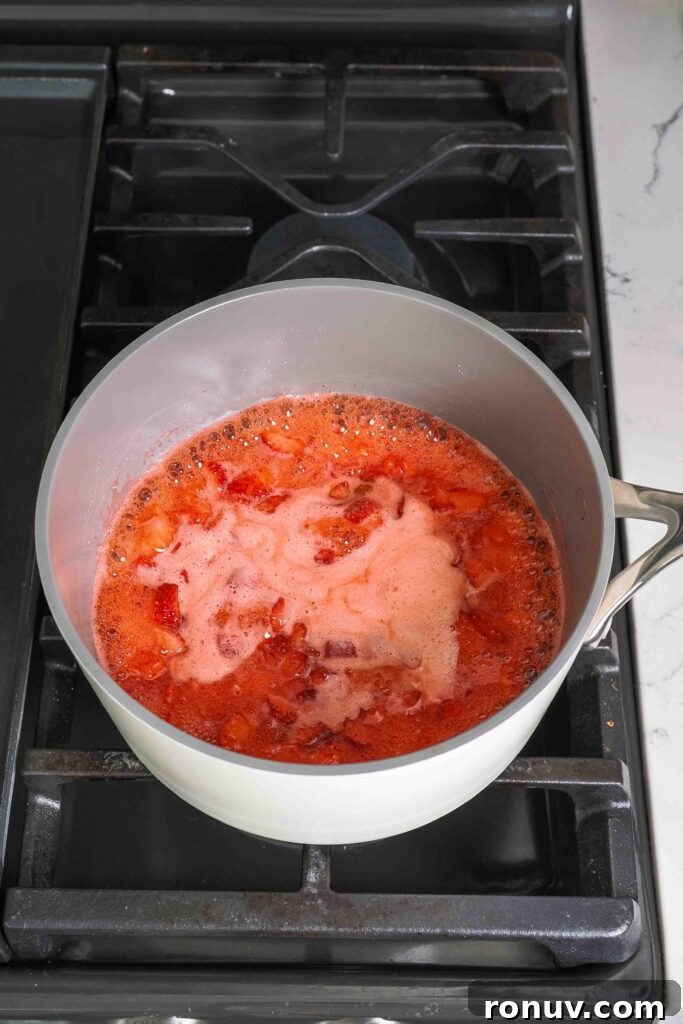
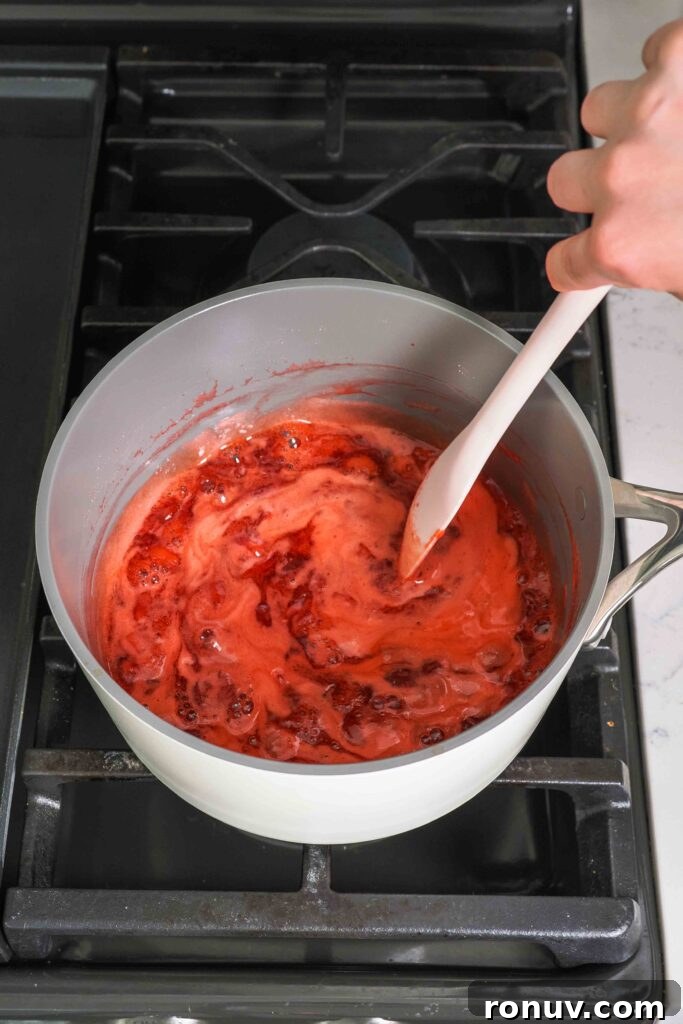
After the jam has boiled steadily for about 5 minutes, test for doneness. There are two reliable methods: a thermometer or the chilled plate test.
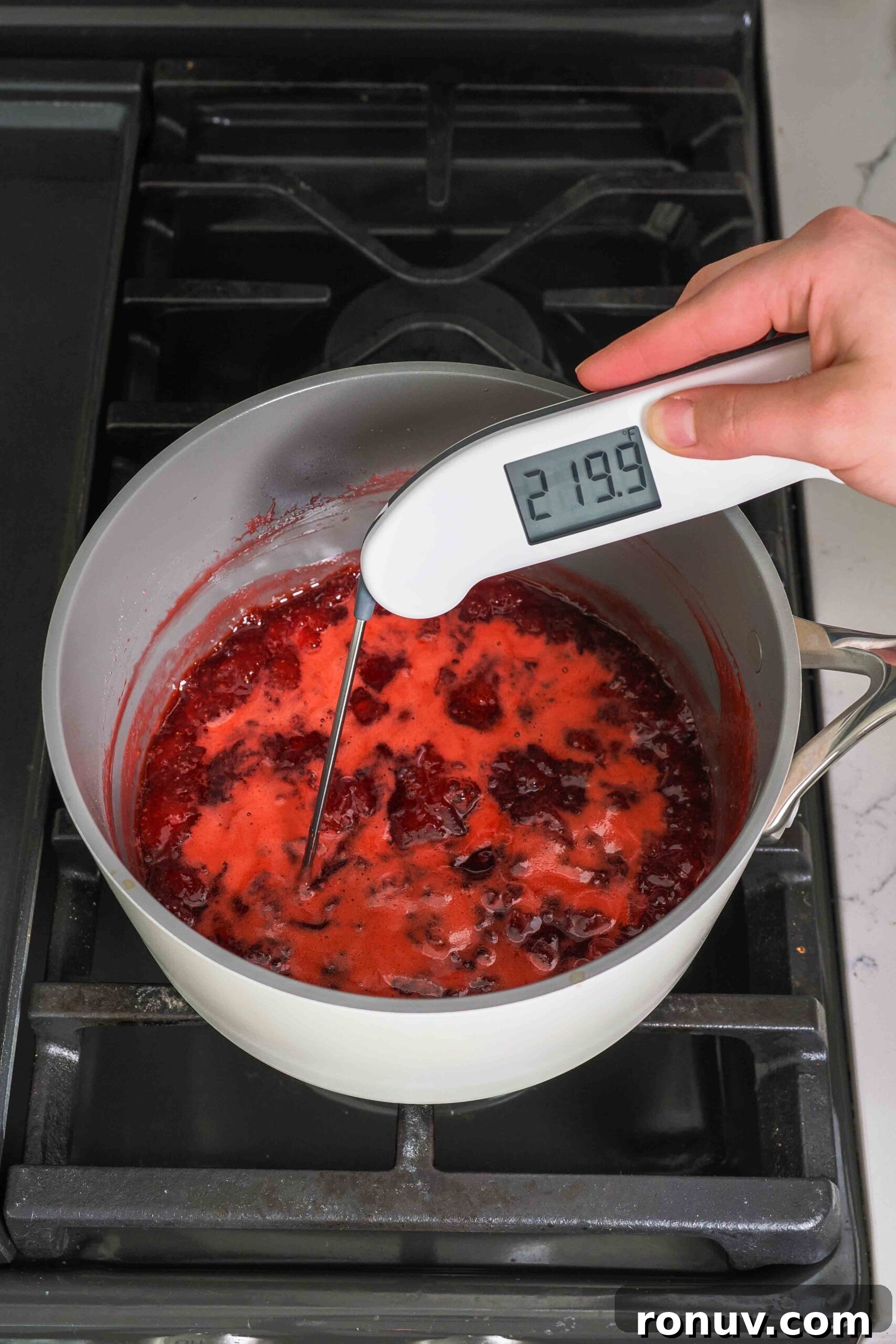
Temperature Check
Use a quick-read or candy thermometer to ensure the jam reaches 219–220°F (104–105°C). Sugar and water form a gel around 220°F, so reaching this temperature is the most reliable way to ensure the jam will set. Because strawberries are lower in natural pectin, reaching this point is especially important; otherwise you’ll end up with a pourable syrup rather than a spreadable jam.
Avoid overcooking past 220°F by too large a margin, which concentrates the mixture and can make the jam stringy or overly firm. If your jam does become too thick after cooling, you can gently stir in a teaspoon or two of warm water at a time to loosen it.
The Chilled Plate Test
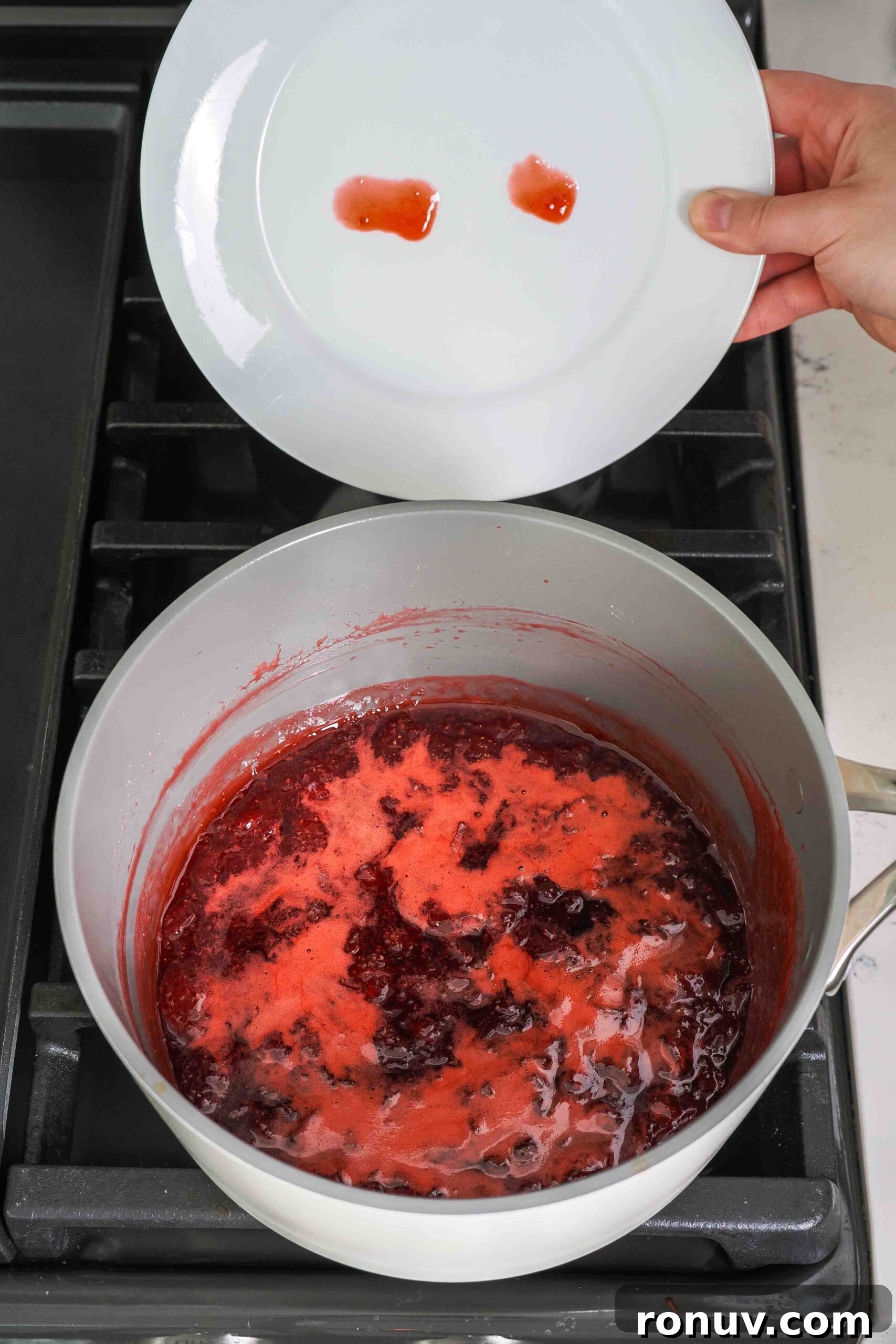
If you don’t have a thermometer, use a chilled plate. Place a small ceramic plate in the freezer before you start. When the jam has boiled and started to thicken around the edges, drop a spoonful onto the cold plate and wait 10–15 seconds. Tilt the plate: if the jam runs quickly, cook a little longer and test again. If the drop holds its shape or only slowly moves, the jam is ready.
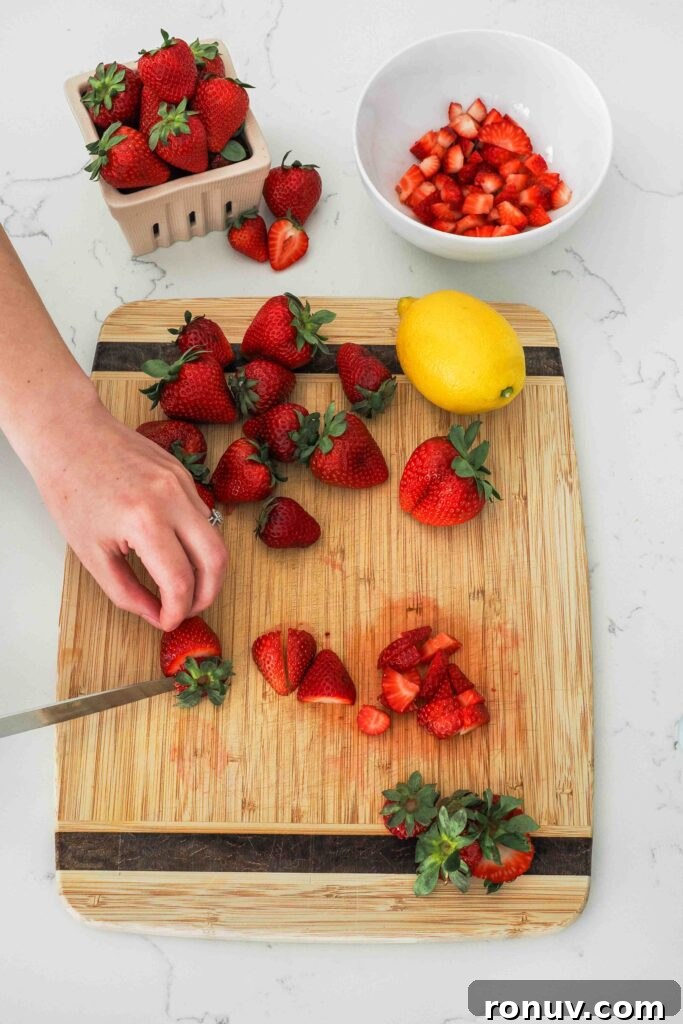
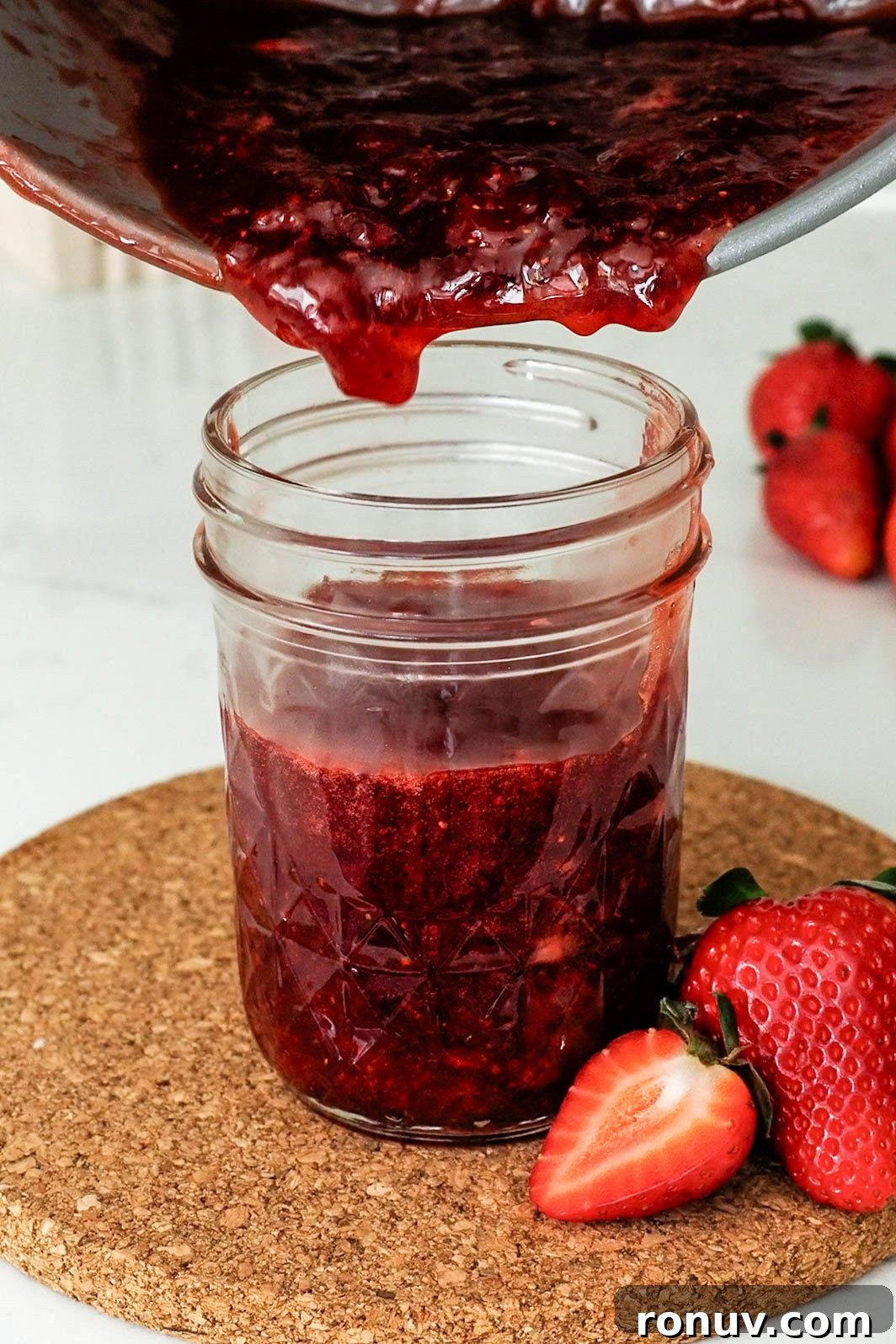
When the jam is finished, remove it from heat and transfer it into clean half-pint jars, then seal. Let the jars cool at room temperature for a couple of hours before refrigerating or freezing. This recipe yields about one full half-pint jar plus roughly half of another, approximately 14 ounces (400 ml) of jam.
Other Recipes You May Enjoy
If you like this small-batch strawberry jam, you may also enjoy my small-batch cherry jam and a champagne-infused strawberry jam that works beautifully in strawberry champagne cupcakes.
For more recipes featuring late spring and early-summer fruit, try the cherry almond cupcakes or a simple strawberry ice cream that pairs well with a spoonful of this jam.
Dish Cleanup: Not Too Bad
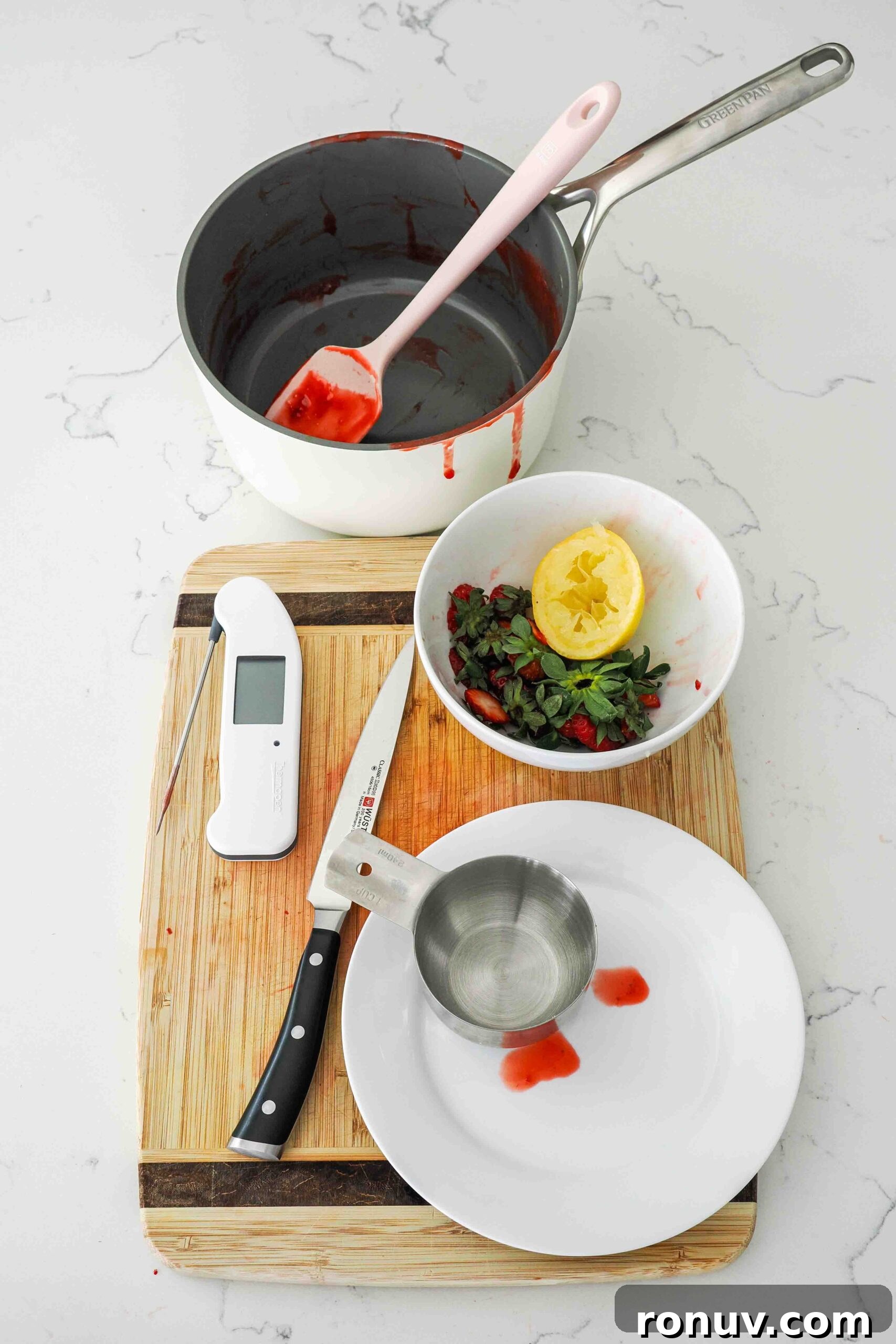
I rate cleanup on a scale from 1 to 5, where 1 is very few dishes and 5 is a mountain of washing. This recipe ranks a 2. You’ll need a medium pot, a knife and cutting board, a spatula, and either a thermometer or a chilled plate for testing.
To make cleanup easier, soak the pot with warm soapy water for 10–15 minutes to loosen any stuck jam. The remaining items can be washed right away with normal dish soap.
Strawberry Jam Recipe—Small Batch
Thanks so much for stopping by! If you make this small batch of strawberry jam, please leave a review to share how it turned out.
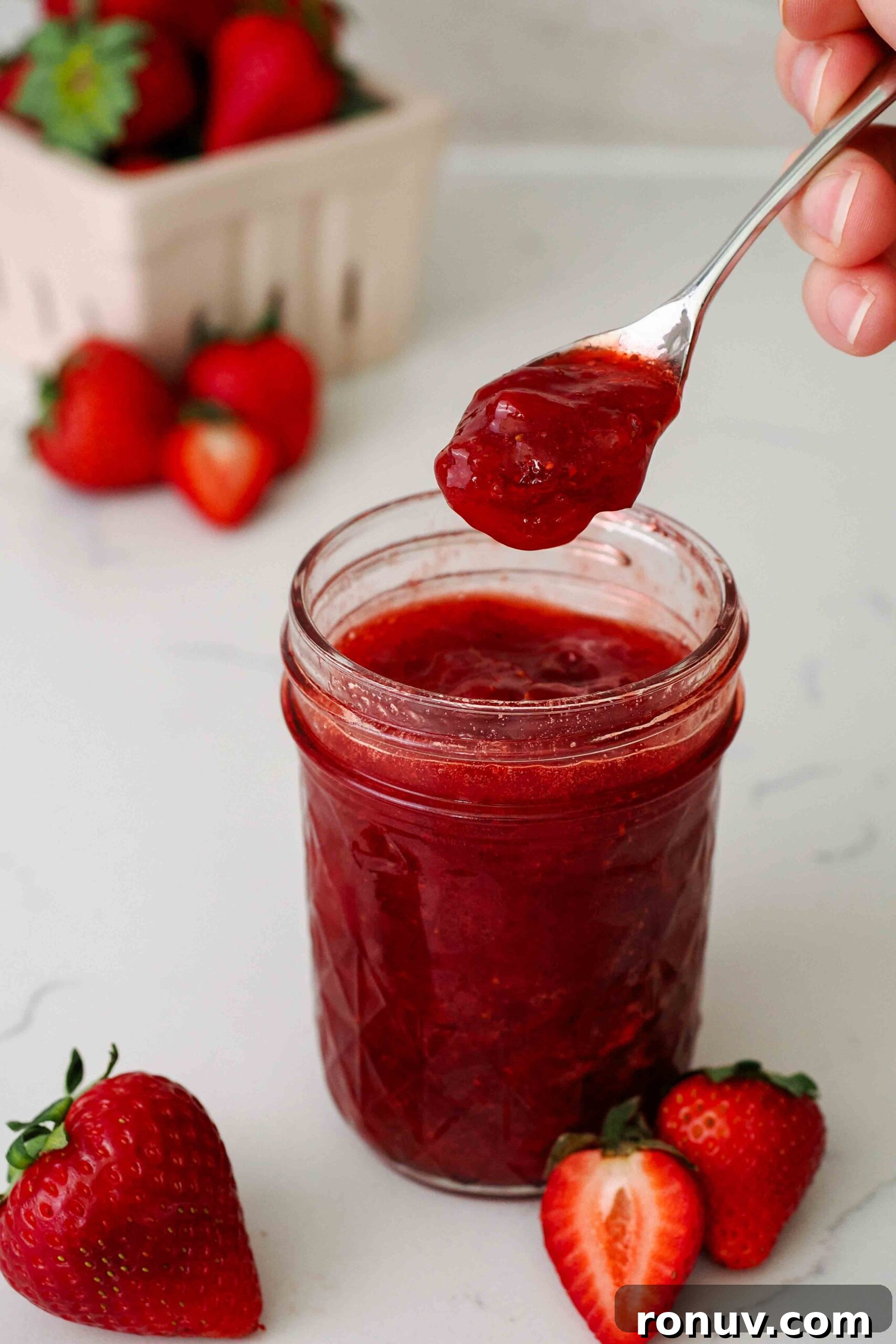
Small Batch Strawberry Jam
Ingredients
- 2 cups (400 g) diced and hulled strawberries from about one 16-oz container
- 1 cup (200 g) granulated sugar
- 2 Tablespoons (30 ml) lemon juice from about one lemon
Instructions
-
Wash the strawberries and remove the leaves. Dice the strawberries into ¼” (6 mm) pieces so they cook quickly and evenly. Combine the diced berries, sugar, and lemon juice in a medium pot.2 cups (400 g) diced and hulled strawberries, 1 cup (200 g) granulated sugar, 2 Tablespoons (30 ml) lemon juice
-
Heat the mixture over medium, stirring occasionally, until the sugar dissolves and the syrup becomes a rich red, roughly 10 minutes.
-
Bring the jam to a rolling boil that won’t be stirred down. Stir intermittently to scrape the bottom and cook for about 10–15 minutes until the jam thickens and reaches 220°F/105°C. If you don’t have a thermometer, use the chilled plate test: drop a small spoonful on a cold plate, wait 15–20 seconds, and tilt. If the jam runs, cook a minute more and retest; if it holds, remove from heat.
-
Pour the hot jam into clean jars, seal, and refrigerate. The jam will firm up as it cools; for best texture, let it set overnight before using.
Video
Notes
Because strawberries contain less natural pectin than some other fruits, dice them into small pieces before cooking. Smaller pieces help the jam set and ensure a pleasant spreadable texture.
Once opened, store the jam in the refrigerator for up to three months. Unopened jars can be frozen for up to one year.
This recipe can be processed for longer shelf life; consult official guidelines such as those provided by the USDA for safe home canning practices.
Recommended Supplies
-
Quilted half-pint jelly jars with lids and bands
-
Silicone spatula or spoonula
-
Candy thermometer or instant-read thermometer
Nutrition
I’d love to see your results — tag @floralapronblog on Instagram or use the hashtag #floralapronbakes to share a photo.
FAQs about Homemade Strawberry Jam
Strawberries are relatively low in pectin, the natural substance that helps jams and jellies gel. Without added pectin, whole strawberries are too heavy to remain suspended in the spread. Chopped strawberries distribute evenly and allow the jam to set into a smooth, even texture.
Syrupy jam usually means it didn’t reach the necessary gelling point. Cook the mixture to 219–220°F (104–105°C) or use the chilled plate test to confirm. If it’s already finished and too thin, you can reheat and reduce it further to reach the gelling temperature, or repurpose it as a flavorful syrup for ice cream and drinks.
Overcooking will concentrate the jam too much, making it dense and stringy. This can happen if the thermometer is inaccurate or if the jam is left in a very hot pot to cool. To rescue it, stir in small amounts of warm water until you reach a smoother consistency.
Yes—stirring in a teaspoon or two of vanilla extract or a small amount of vanilla bean paste after removing the jam from heat adds a lovely depth of flavor.